
Vase of Mariée: when the bouquet remained in the house
The tradition of preserving wedding flowers in vases and under glass domes in the 19th century.
Pesquisa e curadoria: Jorge Feitosa e Fábio Garcia
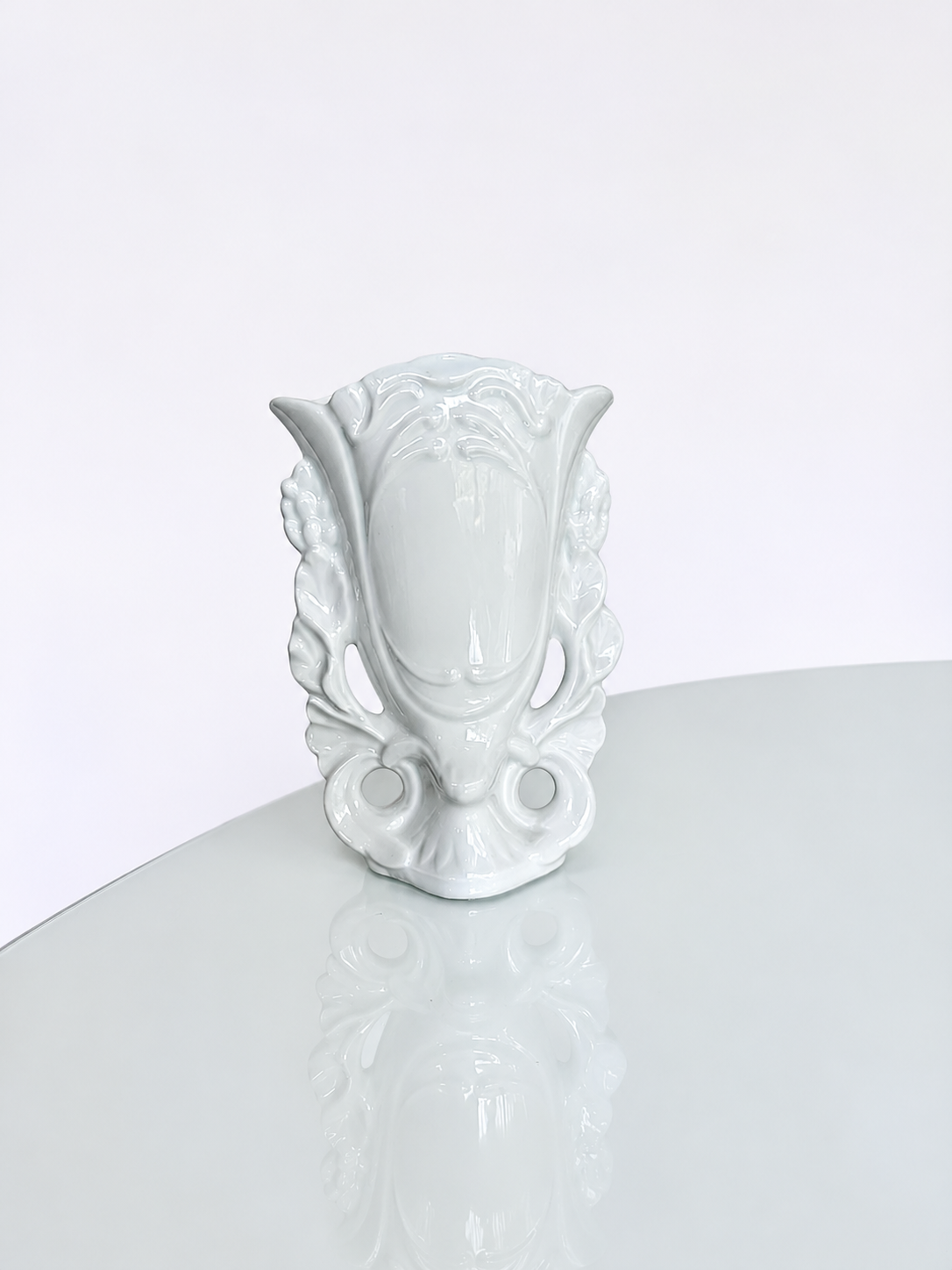
O Vase de Mariée do Acervo Jorge Feitosa, catalogado como porcelana de Limoges do século XIX, apresenta relevos brancos e aberturas vazadas que permanecem expressivos mesmo sem flores. Objetos desse tipo estão ligados aos costumes de preservar lembranças do casamento dentro de casa. Vasos ornamentais e buquês protegidos sob cúpulas de vidro participavam dessa memória doméstica; a tradição, porém, não documenta o uso específico deste exemplar por uma família.
The Répertoire du patrimony culturelle du Québec records the vases of married couples as gifts of people close to their fiancés, with decorative and commemorative function. Some were presented under glass domes, forming small sets destined to stay in the house.
The Musée Mode & Denelle, in Brussels, describes the conservation of the bouquet under a glass bell from the mid-19th century. Artificial flowers, crowns and elements of the ceremony were organized to remain visible and protected, often close to the portraits of the couple.
The Mucem preserves a wedding set of 1885, with small vase and floral composition under dome. The catalog of the French Ministry of Culture documents another bouquet presented in white and golden vase. These records allow to visualize the place of flowers among the objects of wedding memory.
The 19th century vase of Mariée de Limoges by Acervo Jorge Feitosa is made of white porcelain molded, with relief ornamentation and hollow openings. The contour worked and the open spaces on the surface give the piece an ornamental presence even without flowers.
In monochromatic composition, each relief becomes more visible. The tradition of wedding objects adds context to the form: vases like this integrated the preserved elements to remember the marriage and the beginning of a shared domestic life.
Keeping the bouquet under glass or booking a vase for the occasion allowed the presence of flowers to be prolonged in the house. Limoges's example preserves this relationship between decorative object and family memory, characteristic of the table arts and the 19th century domestic environment.
Related readings
Documents and pages of the Acervo used as an editorial or in-depth basis. Do not replace catalogues of manufacturers and primary sources when required by historical identification.
- Québec Cultural Heritage Directory — Wedding VaseTypology and commemorative function of an archaeological complex of the mid-19th century.
- Fashion & Lace Museum — Wedding bouquetPractice of preserving the bouquet under the dome in the 19th century.
- Mucem — Wedding bouquet, 1885Museum register of vase and flower set under glass.
- Ministry of Culture — Wedding bouquet or Wedding GlobeSet with glass vase, bouquet and dome.
Objects related to this research
Limoges · Vase de Mariée
France • 19th century
Wedding vase in white porcelain molded with floral relief and leaked cuts.