Val Saint Lambert: two centuries of Belgian crystal
Founded in 1826, the manufacture brought together stoned glass, Luxval pressed glass and design experiences throughout the 20th century.
Pesquisa e curadoria: Jorge Feitosa e Fábio Garcia
Um par de candelabros de cristal, um serviço âmbar da linha Luxval e um abajur revelam lados diferentes da Val Saint Lambert. Fundada na Bélgica em 1826, a manufatura trabalhou tanto o cristal lapidado quanto o vidro prensado, com técnicas e resultados próprios. Os exemplares reunidos pelo Acervo Jorge Feitosa contam parte dessa história de fabricação e convidam a olhar para os cortes, as formas e a passagem da luz.
Seraing, 1826: the origins of the glassworks
François Kemlin and Auguste Lelièvre were at the head of the Verreries et Institutions du Val Saint-Lambert foundation in Seraing. Belgian industrial expansion and investment in glass production favored the growth of the company during the 19th century.
According to the chronology published by the factory itself, Val Saint Lambert received a gold medal at the Belgian industrial product exhibition held in Brussels in 1841. Her participation in the Universal Exhibition of Antwerp in 1894 also marked the dissemination of pieces with geometric patterns stoned.
The company's commercial development accompanied the growth of exports. In the early 20th century, the glassworks employed thousands of workers and participated in international exhibitions, as recorded by the Design Museum Brussels.
The drawing built by the cut
The stoning allows to create plans, incisions and patterns that modify the passage of light through the crystal. In the history of Val Saint Lambert, the repetition of geometric motifs became part of a recognizable repertoire, especially in the objects presented at the turn of the twentieth century.
The cuts are the result of proportional choices and successive finishing operations. In Val Saint Lambert's drawings, the combination of facets and polished surfaces determines the way the light crosses the crystal.
Luxval and the production of pressed glass
In the 1920s and 1930s, the manufacture incorporated repertoires linked to Art Deco and the industrial production of decorative objects. The Luxval line, associated with pressed glass, helps to understand this diversity.
The Corning Museum of Glass keeps a bottle with a lid identified as Valambert, produced by Val Saint Lambert in Seraing between 1930 and 1935. The museum records transparent pressed glass with colored yellow areas on the surface: a distinct technique of stoning glass pieces.
Charles Graffart and René Delvenne are among the professionals linked to the history of Val Saint Lambert's design, as the research presented by Design Museum Brussels. The name of the manufacture therefore covers different material languages and should not be used as a synonym for a single technique.
The catalogs of the mid-20th century
World War II brought destruction to the glassworks and financial difficulties. In the post-war period, production included new household objects and decorative pieces.
Catalogs and commercial lists of the 1950s allow us to study this repertoire. An independent documentary compilation of publications of the company records different materials of 1956, while the Grand Curtis in Liège preserves a historical set of 170 albums, catalogues, price lists and brochures.
Among the commercial materials preserved are documents of 1956, also associated with pair of Acervo candlesticks. Catalogues such as these show the variety of models and finishes offered by the glassworks in the post-war period.
Four records from Val Saint Lambert in the Acervo
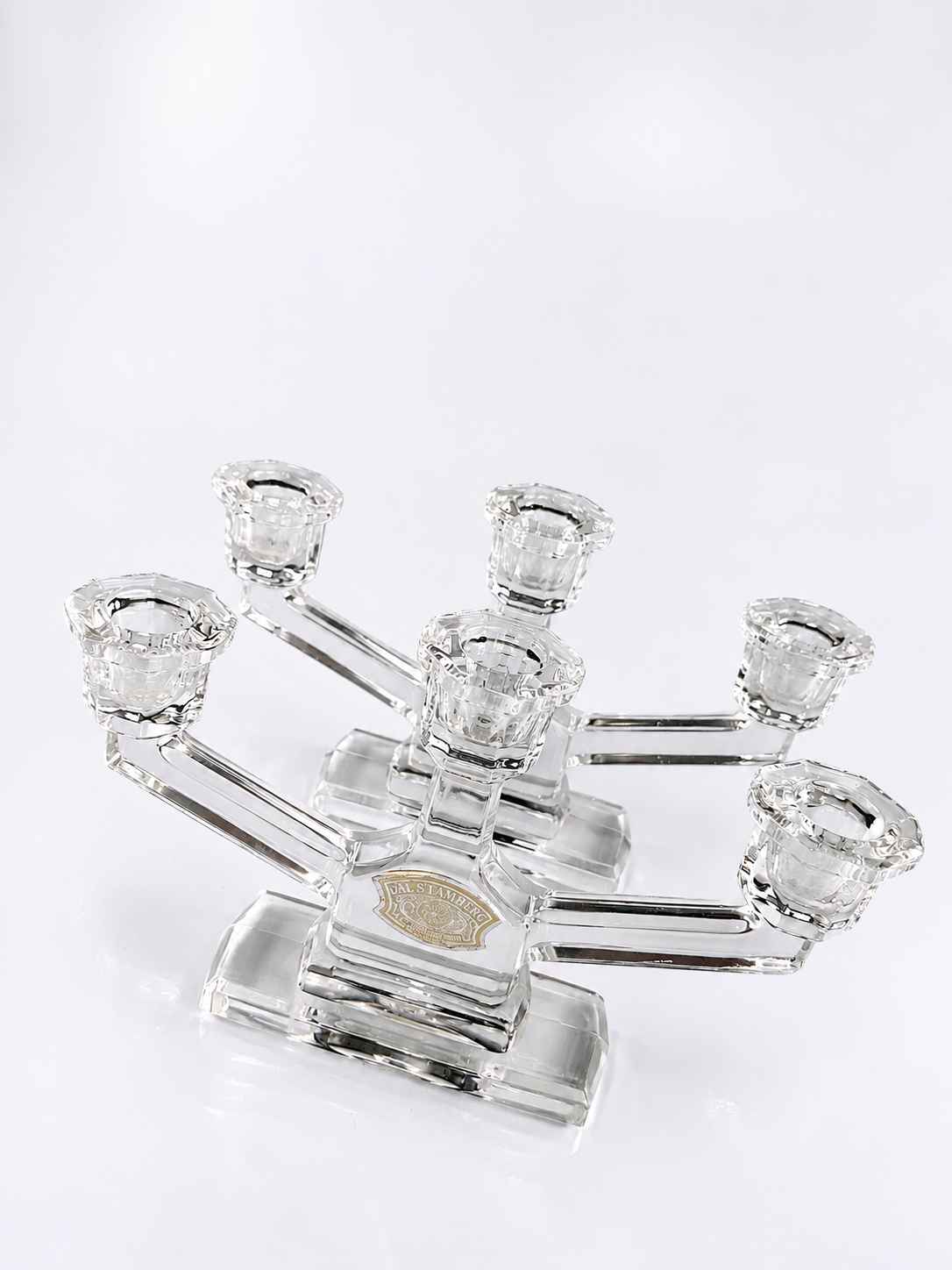
The Acervo Jorge Feitosa brings together a pair of transparent Val Saint Lambert chandeliers from 1956, with overlapping arms and faceted geometric bases. The pieces explore the relationship between the construction of the object and the passage of light through the crystal.
The selection also includes a Lunch Luxval amber glass service, associated with the 1930s, with handles and ripples dishes. The set refers to the possibilities of pressed glass developed by the company.
Another record is the Blue Torsion lamp, whose rod has a blue spiral and a metallic socket. The set of amber-reserved stoned glass towel remains in the Acervo's history, after its circulation to another collection.
These four records show the variety of production Val Saint Lambert: stoned crystal, pressed glass, tableware and lighting. The same manufacture has crossed very different languages throughout the 20th century.
The bicentenary and preserved documents
In 2026, Val Saint Lambert completed two hundred years. To mark the date, Design Museum Brussels presented, from April 24 to October 25, the Val Saint Lambert & Design exhibition (1958–2000), dedicated to the relationship of glassmaking with artists and designers in the second half of the 20th century.
In Liège, the Grand Curtis museum released a project to digitize its collection of commercial manufacturing publications. The documentation includes materials from the 19th and 20th centuries that can help researchers recognize designs, denominations and circulation periods.
Os catálogos e as coleções públicas ajudam a distinguir os muitos desenhos e técnicas da Val Saint Lambert. Nos exemplares do Acervo, os cortes geométricos dos candelabros e o vidro prensado âmbar da linha Luxval mostram duas maneiras diferentes de trabalhar a luz e a superfície.
Related readings
Documents and pages of the Acervo used as an editorial or in-depth basis. Do not replace catalogues of manufacturers and primary sources when required by historical identification.
- Val Saint Lambert — Official Time LineFounded in 1826, medal of 1841, exhibition of 1894, Art Deco and post-war changes.
- Design Museum Brussels — Val Saint-Lambert & DesignHistorical presentation of the manufacture and exhibition of the bicentennial, held from April to October 2026.
- Corning Museum of Glass — Valambert, decanter with stopperMuseum register of pressed Luxval glass, produced between 1930 and 1935.
- Grand Curtis — Val Saint Lambert Bicentenary and Digitization ProjectIt documents the set of approximately 170 historical commercial publications.
- Philippe Colard — VSL Archives, catalogues from 1826 to 2020Independent index listing commercial materials from 1956; does not prove correspondence with the Acervo candlesticks.
- Opinion Jorge Feitosa — Candelabros Val Saint LambertDate of birth:
- Acervo Jorge Feitosa — Historical GlassesThematic collection of the Acervo glass and crystals.
Objects related to this research
Val Saint Lambert · Pair of Candelabra
Belgium • 1956
Pair of transparent chandeliers, with overlapping arms and faceted geometric bases.
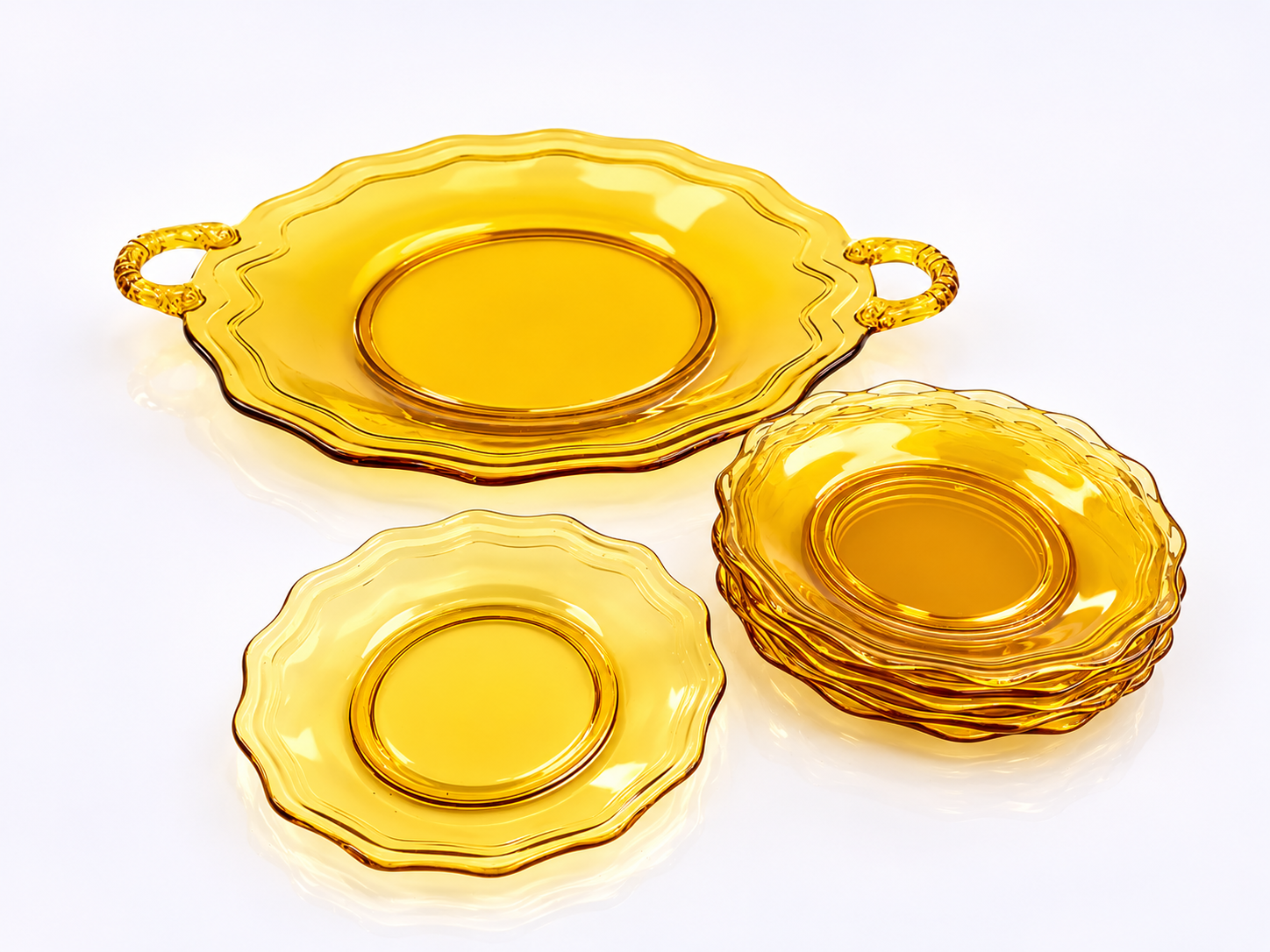
Val Saint Lambert • Lunch Luxval Service
Belgium • v. 1935
Amber glass service with handle rails and wavy edge dishes.
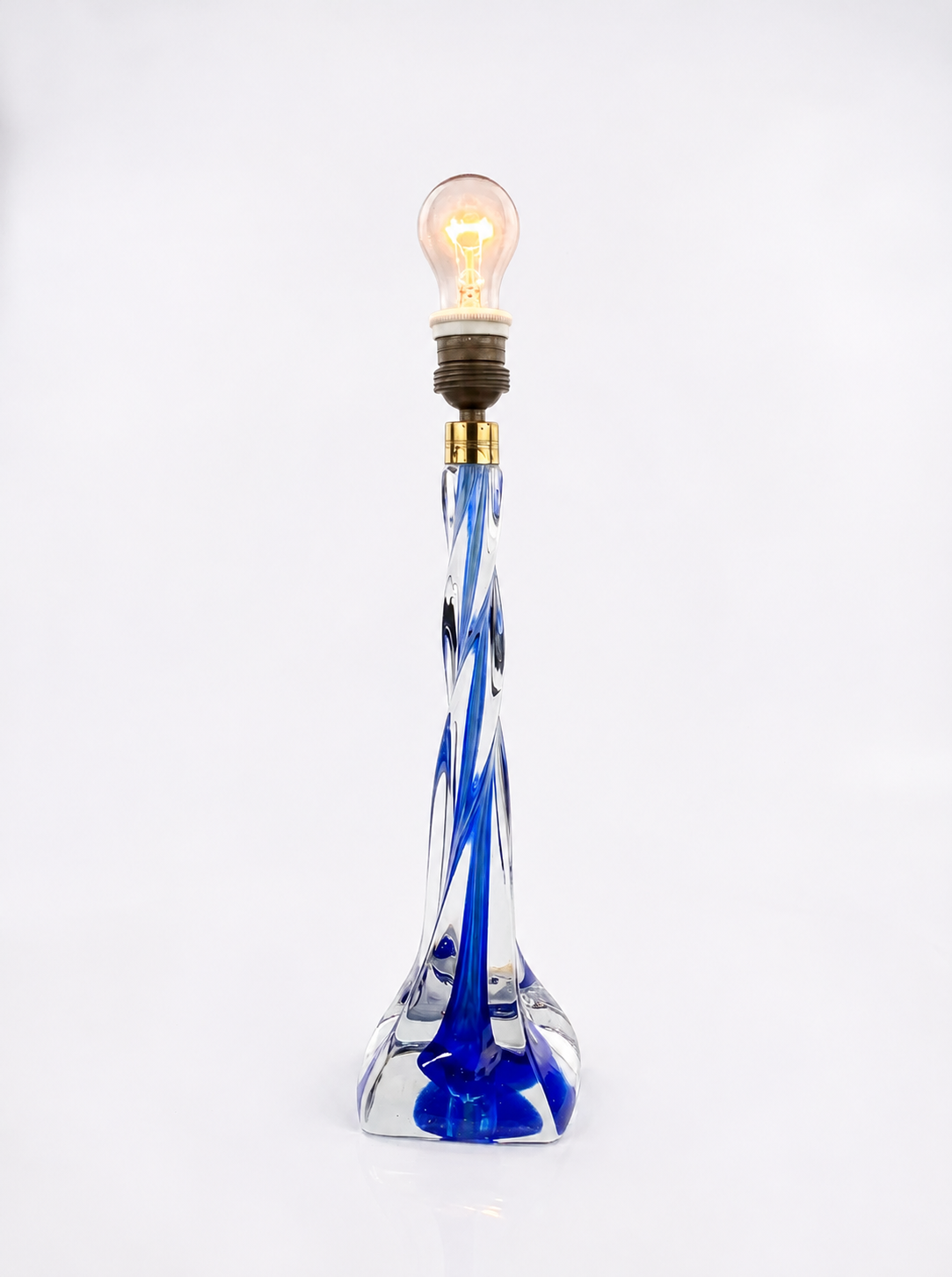
Val Saint Lambert • Blue Torsion lamp
Belgium • 20th century
Snake rod lamp, blue spiral on the body and metallic socket on top.
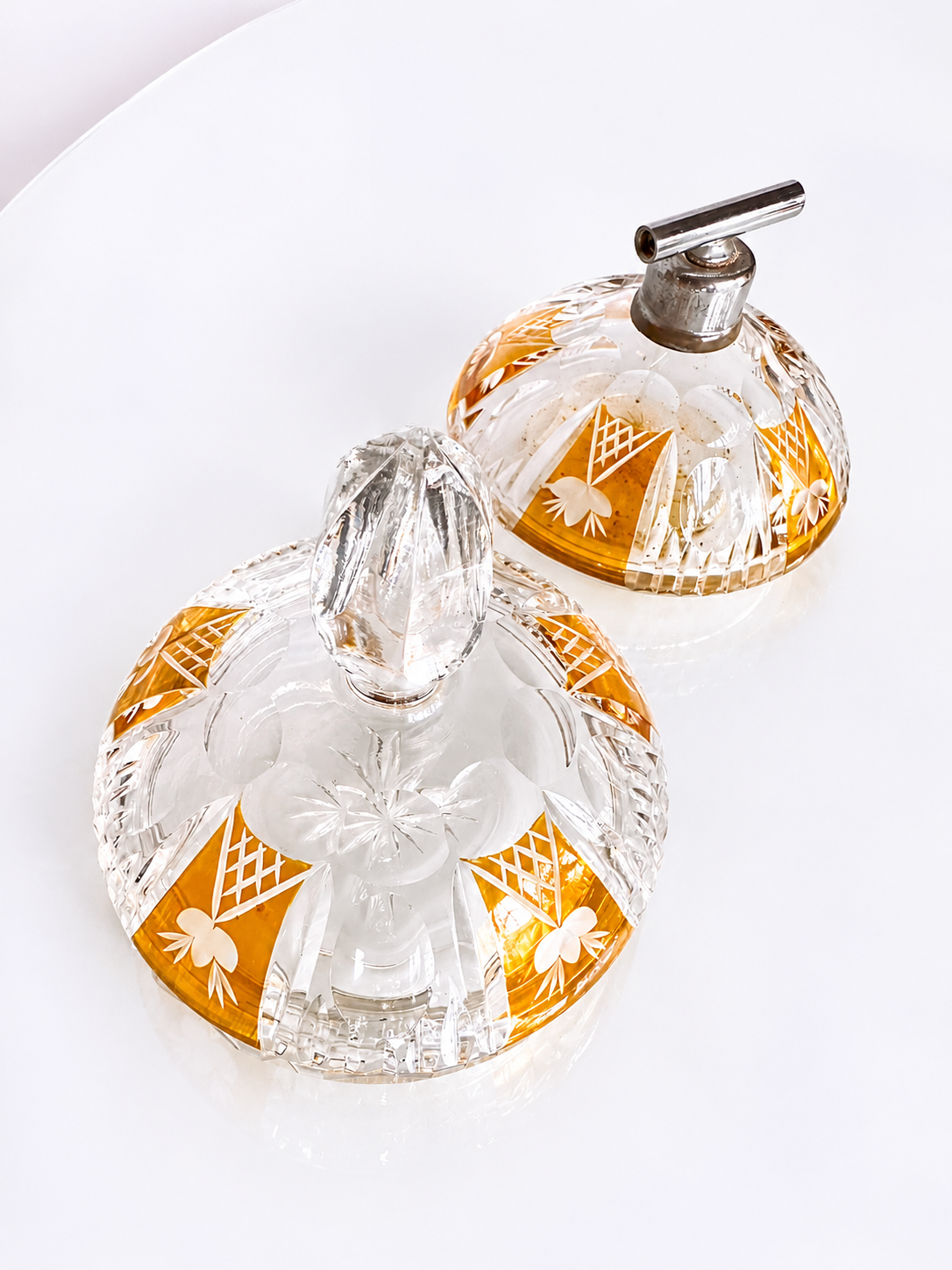
Val Saint-Lambert · Dressing-Table Set
Belgium • first half of the 20th century
Stoned crystal with amber reserves in authentic Art Deco architecture.