Milk pint, grated coconut or snow? The memory of textures in Brazilian ceramics
The surfaces that marked Brazilian vessels of the twentieth century and the names that remained in the memory of the houses.
Pesquisa e curadoria: Jorge Feitosa e Fábio Garcia
Pingo de leite, coco ralado, neve: muita gente reconhece esses vasos brasileiros pelo nome da textura antes mesmo de saber quem os fabricou. Pequenas gotas, grânulos e salpicos em relevo mudam a superfície e a maneira como a luz encontra o esmalte. No Acervo Jorge Feitosa, o conjunto azul da Cerâmica Artística Tupy e outros vasos de meados do século XX mostram diferentes soluções para esse acabamento. Os nomes populares descrevem a aparência; a identificação da fábrica depende de outras evidências.
Names that came from home
Pingo de Leite suggests small drops deposited on the surface. Rated coconut recalls a thin and irregular granulate. Snow evokes a clear cover, almost like flakes spread over the vase. These are simple comparisons, made from known things, and therefore so easy to transmit.
The names approach pieces of similar appearance, but the finishes vary. There are almost flat splashes, relief drops and surfaces covered with small projections. In the domestic vocabulary, milk drip, grated coconut and snow describe the appearance of the object; the factory catalogs record its characteristics in other ways.
This domestic language also helps explain why certain vessels remain familiar even to those who have never heard of Tupy or other Brazilian ceramics.
When the surface is part of the drawing
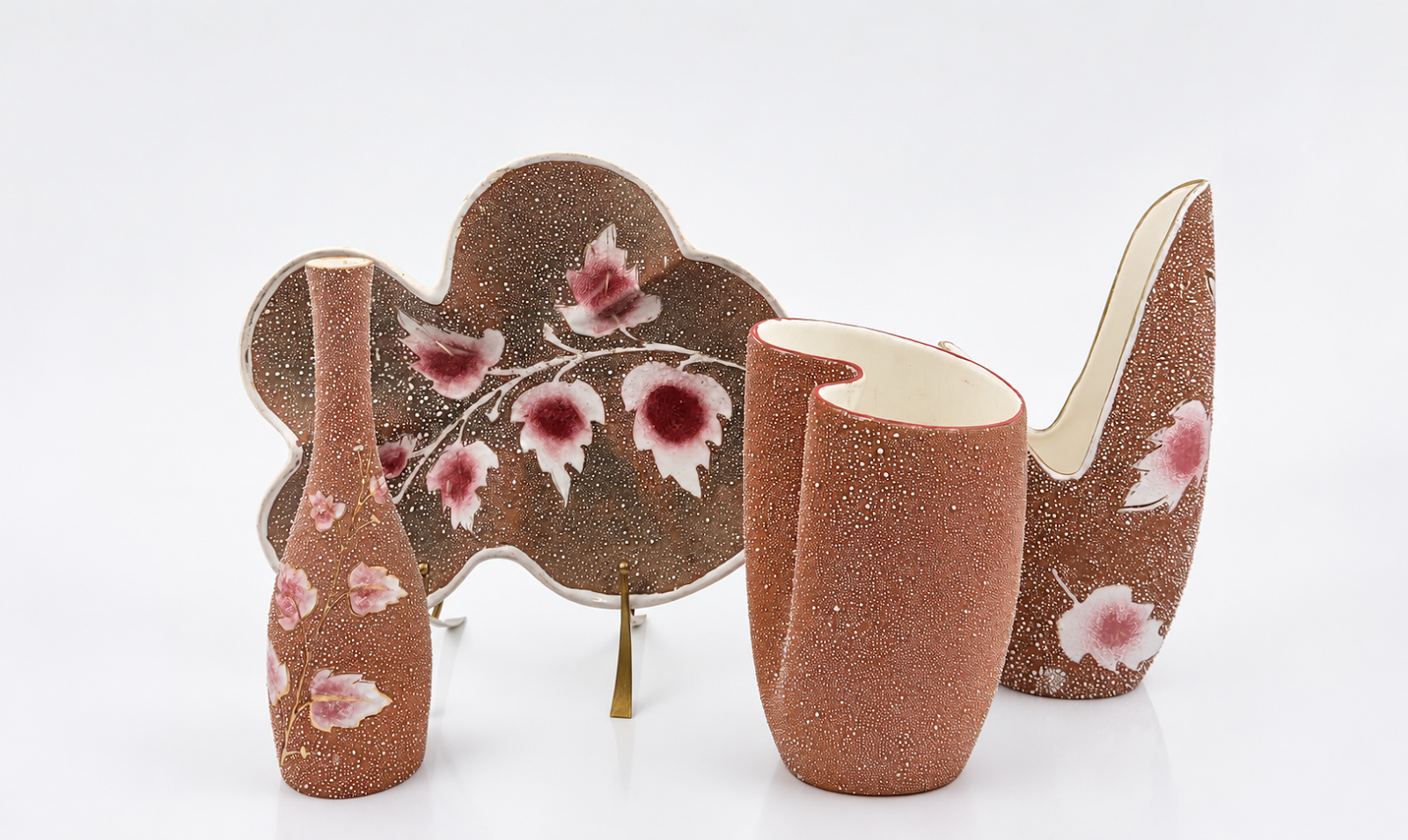
In the Brazilian decorative vessels of the mid-20th century, the texture could occupy the whole body or appear in only a few areas. The relief changed the way the light reached the enamel, highlighted volumes and created contrast with smooth and shiny parts.
The combination with painted flowers, gold details and asymmetrical openings is especially interesting. Instead of operating as a neutral background, the surface is part of the composition: it follows the curves, approaches or separates decorative elements and changes the perception of the color according to the angle of observation.
A front photograph reveals the general shape. The side light shows the thickness of the small protrusions and allows to perceive differences between a drop, a granule and a spatter. It is closely looking that seemingly similar vessels begin to show their particularities.
How these textures could be made
In ceramic workshops, the surface receives different treatments before the piece is ready. A glaze can be applied in order to create variations of color and brightness; clayy materials can form reliefs; and the conditions of the burning interfere with the result. The Brazilian Ceramic Association describes these procedures as part of manufacturing processes that vary according to the type of object and the technique used.
The appearance of grated coconut or milk pungent may result from different treatments. In some vessels, projections are thick; in others, the texture seems to be concentrated in the enamel. Two workshops could achieve close effects by different processes.
This variety is part of the interest of these pieces. The finishes do not need to have a unique technical origin to compose a recognizable repertoire of Brazilian decorative ceramics.
Tupy and the other Brazilian ceramics
The Tupy Ceramic Pingo de Leite set preserved by the Acervo brings together blue-clear pieces of asymmetrical openings with floral decoration and golden details. The small reliefs accompany the volumes and give the surfaces a look that remains characteristic of the set.
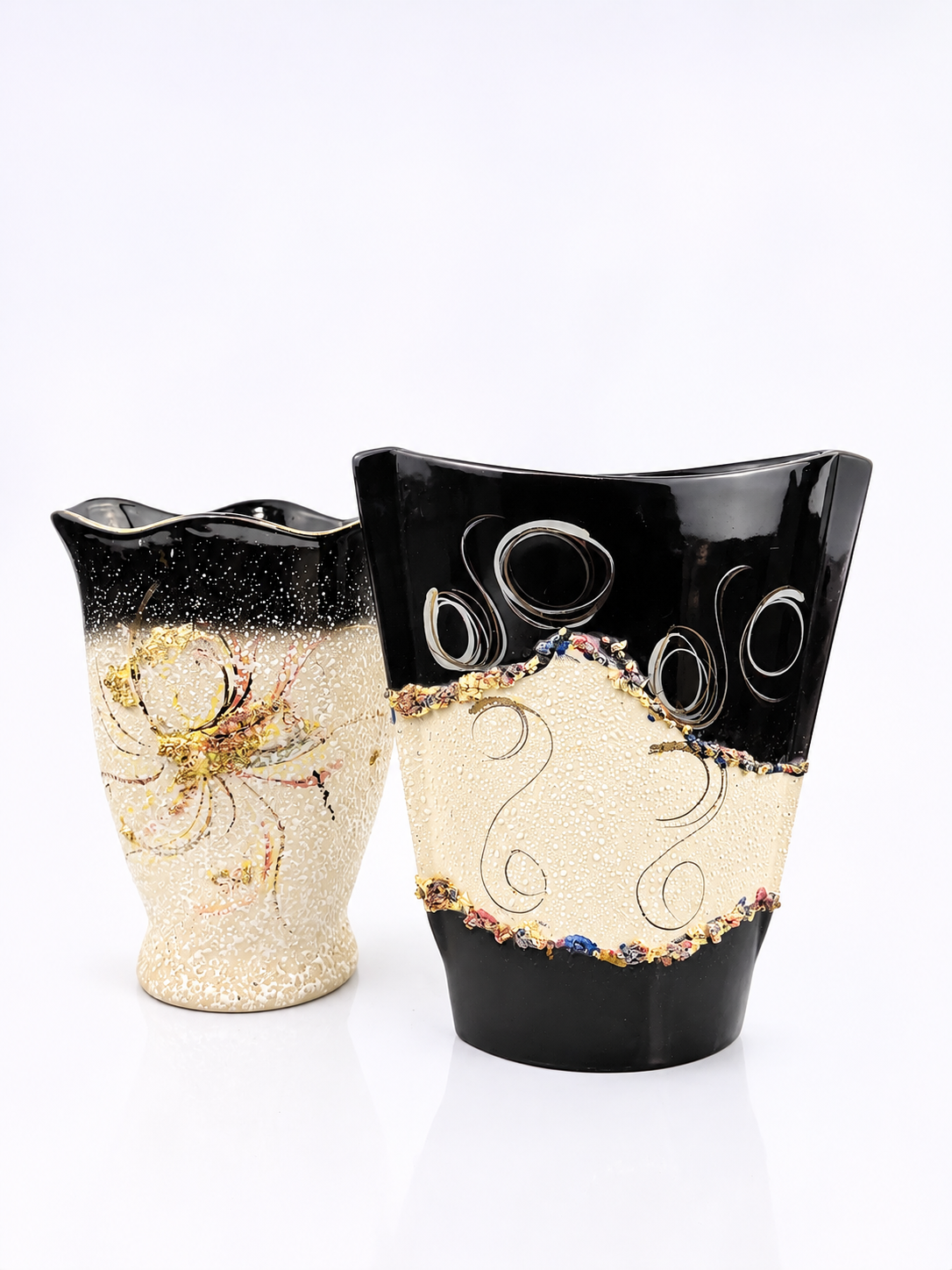
Other Acervo specimens expand the comparison. There are flower vessels in blue and gold, a composition of vases and dish in brown tones and a pair of vases in black and ivory whose enamel has spatter. The differences between these pieces show how the same idea of surface could be explored with different colors, shapes and relief intensities.
The inventory also includes vessels from Timpani Ceramics and RW Ceramics with finishes known as Pingo de Leite. Viewed next to Tupy, they allow to compare the relief, the modeling and the color choices of different producers.
The recurrence of these solutions reveals a taste for surfaces worked in the Brazilian artistic ceramics of the twentieth century. Each workshop gave its interpretation to the textures and contrasts between enamel, shape and decoration.
Three vases to open the story
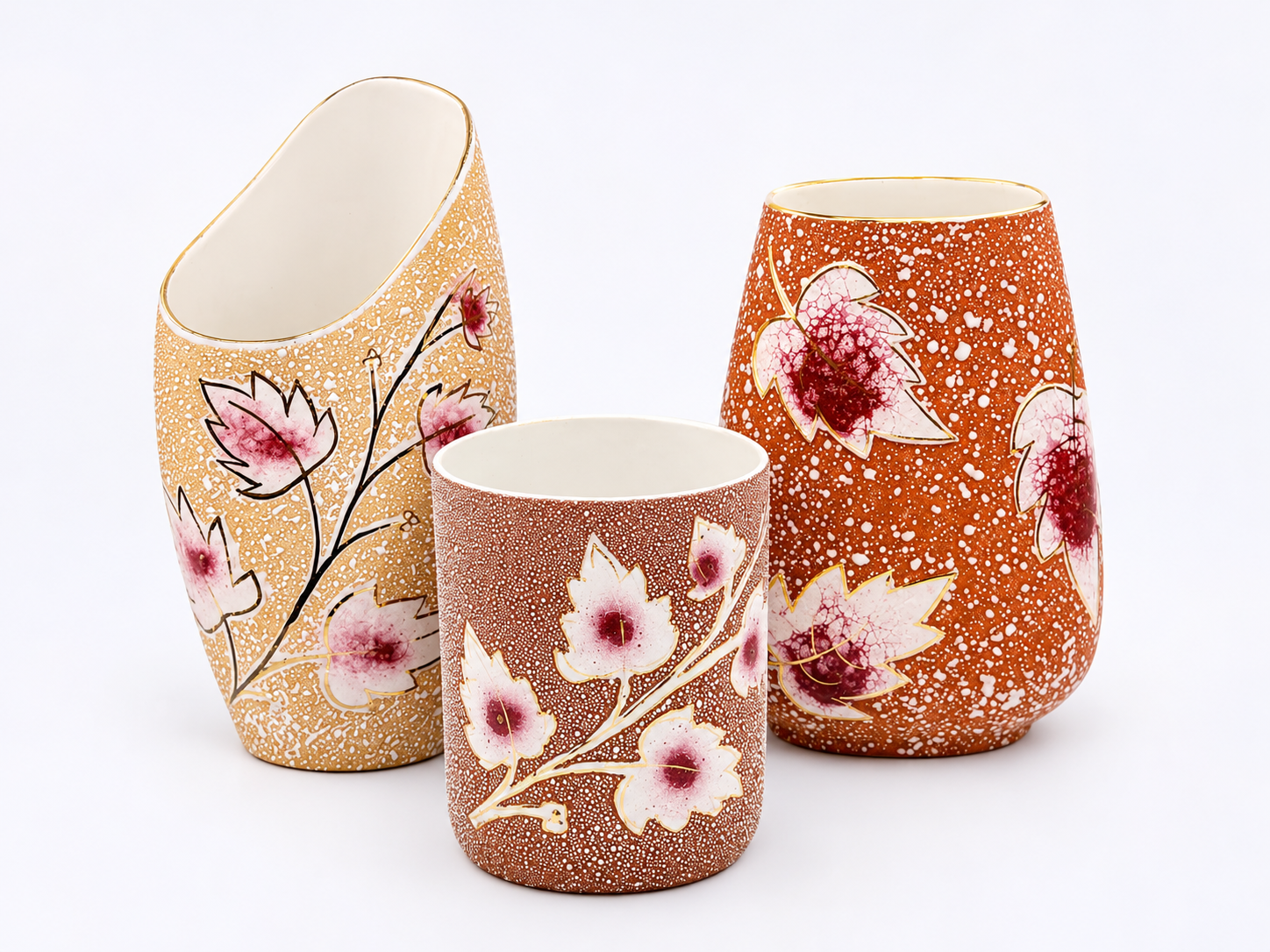
The image chosen for the cover brings together three Brazilian vases in earthy tones, with pink shades, splashed surfaces and botanical motifs. In the Acervo catalogue, the set appears as Trio de Vasos — Ceramica Brasileira em Tons Terrosos, associated approximately with the 1960s and 1970s.
The proportions and formats are different, but the surface treatment brings the pieces closer together. This was the reason to present them together: the composition allows you to look at the texture before looking for a signature or recognize a model. Tupy's blue set enters the sequence as a reference in another way to work reliefs and decoration.
The Acervo collected these specimens for surface and drawing affinities. The composition allows us to perceive differences between pieces that share a nearby visual vocabulary.
The memory of a vase in the room
Those who lived in houses where these objects appeared can first remember the place they occupied: a side table, a trimmer, the living room shelf. The name of the factory was often hidden at the base. The texture, on the contrary, was always in sight.
This familiarity helps to understand the permanence of the Pingo de Leite in the domestic repertoire. In September 2026, the newspaper State of Minas presented a composition of the Acervo formed by four Brazilian vessels in terracotta, wine, white and gold, probably located between the 1950s and 1970s. It was a different set from the trio chosen for this cover, but also revealing the current interest in these surfaces.
Pingo de leite, coco ralado e neve são nomes que permaneceram na memória de quem conviveu com esses vasos. A aparência ajuda a reconhecê-los na casa ou numa fotografia; para identificar a manufatura, o Acervo também procura marcas e documentos de produção. Uma textura semelhante pode ter sido feita por oficinas diferentes.
Perhaps that's why a description of grated coconut works so well, even without knowing the manufacturer, we already know what surface to look for, and when we find it, we start to pay attention to what each vessel has of its own.
Related readings
Documents and pages of the Acervo used as an editorial or in-depth basis. Do not replace catalogues of manufacturers and primary sources when required by historical identification.
- Brazilian Ceramics Association — Manufacturing ProcessIt presents the steps of conformation, enameling, decoration and burning; reference for the distinction between processes and finishes.
- Brazilian Ceramic Association — Manufacturing FlowchartsSchemes of industrial processes applied to different segments of ceramic production.
- Ceramics Magazine (SciELO) — A review on the terminology and classification of white ceramicsAcademic study on terminology, materials, processes and differences between ceramic categories.
- State of Minas — New tones and textures in the house (26 Sep 2026)A report that presents a set of four Pingo de Leite do Acervo vessels, distinct from the trio used on the cover.
- Acervo Jorge Feitosa — Brazilian ceramics: shapes and memoryComplementary research of the Curatorial Journal on the forms and surfaces of Brazilian ceramics.
- I'm looking for Jorge Feitosa — Trio de Vasos in Tones TerrosososRecord of the set whose photograph opens this chapter.
Objects related to this research
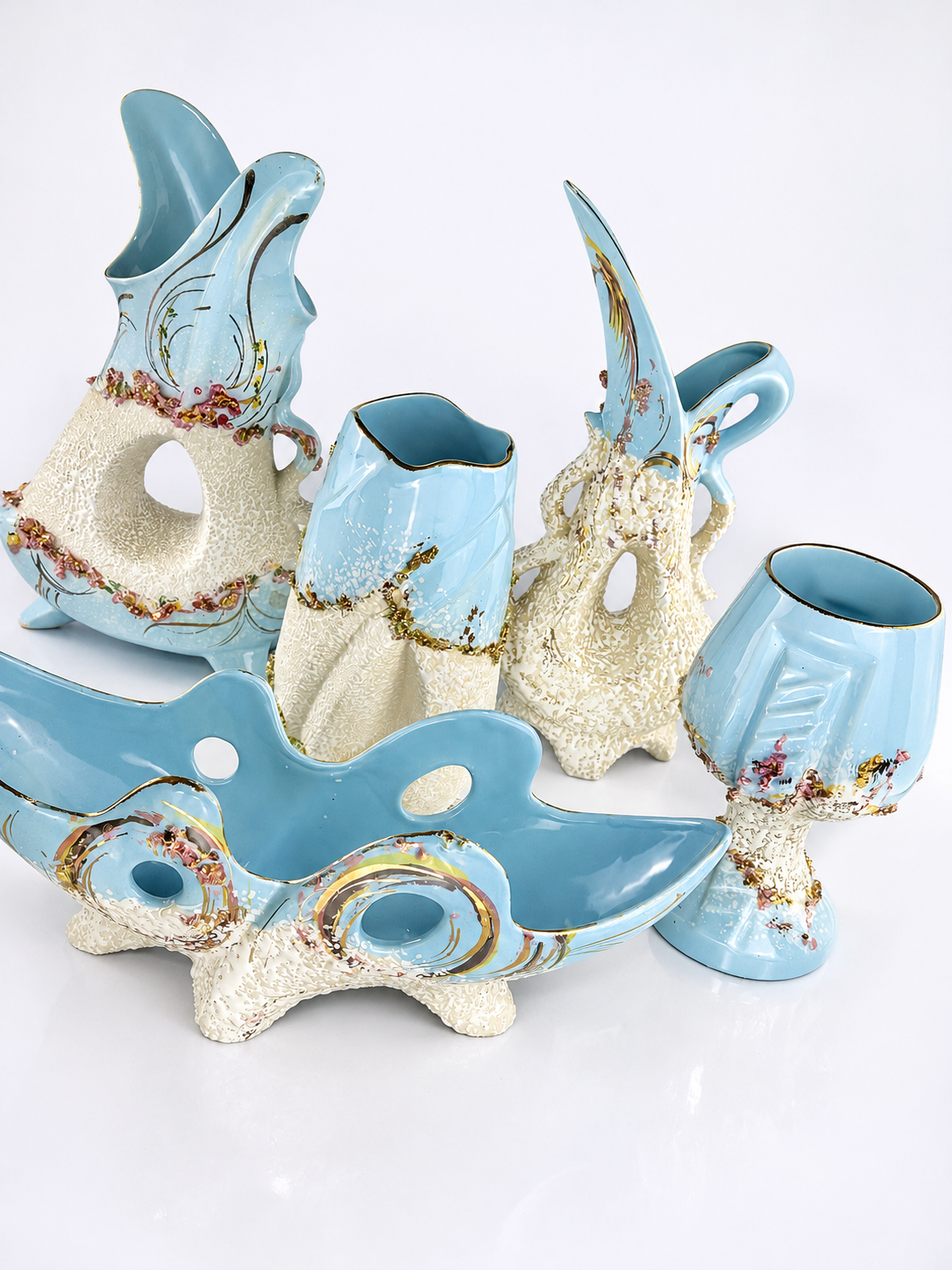
Tupy Ceramics · Pingo de Leite Ensemble
Brazil • 20th century
Set of light blue pieces, with asymmetric openings, milk-pink surfaces and floral decoration with golden details.
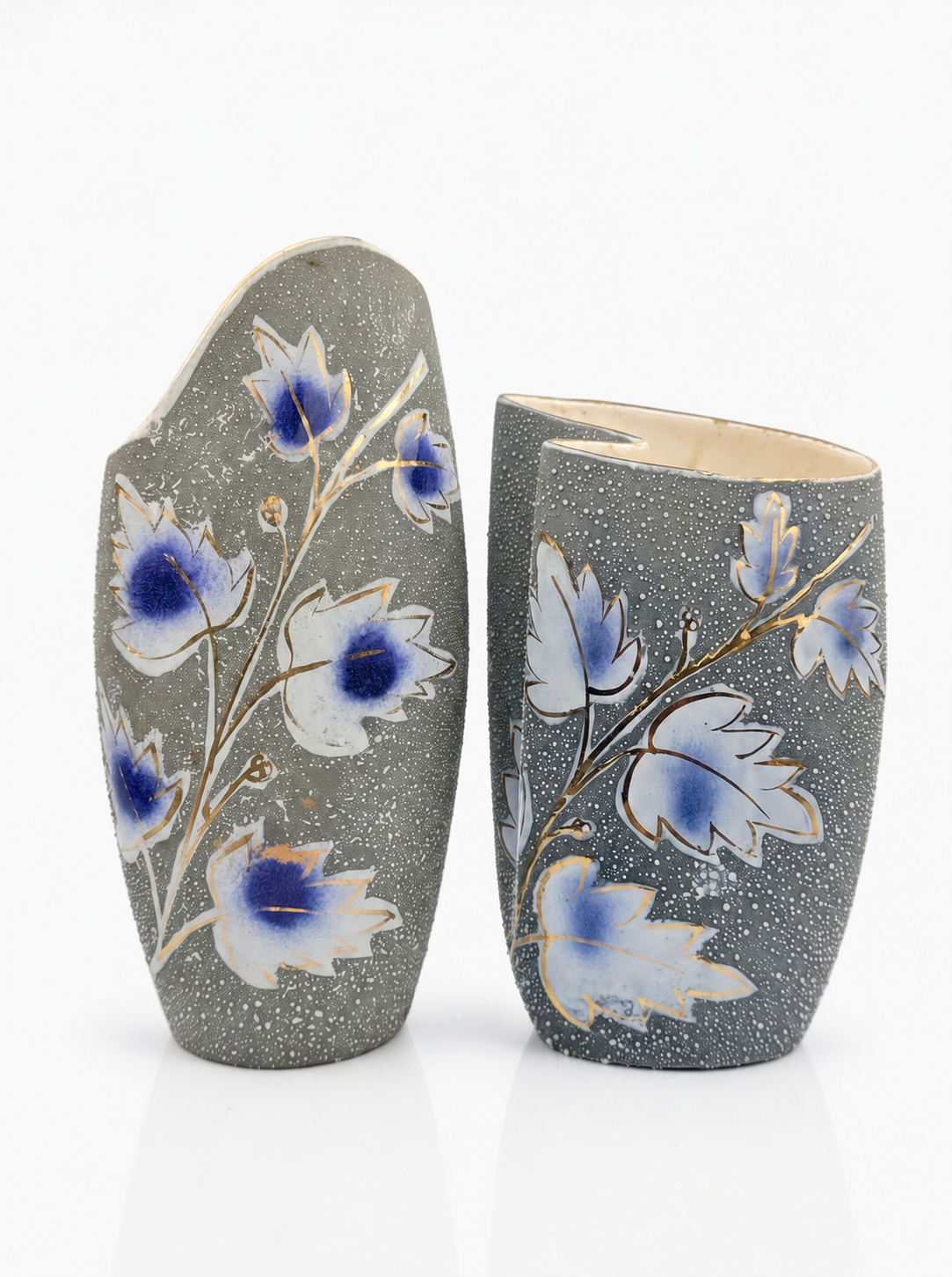
Pingo de Leite • Blue and Gold Floral Vases
BRAZIL • XX SECOND • EMPLOYED CERAMIC
Double vessels of different heights, with asymmetrical contours, a drop-of-milk finish and blue flowers bordered with gold.
Pingo de Leite Ceramics · Floral Vases and Plate
Brazil • 20th century
Composition with vases of different sizes and decorative dish, in shades of brown, with a finishing of the milk and floral motifs.
Brazilian vessels • Pingo de Leite
Brazil • Mid-20th century • Glazed ceramics
Two vessels of asymmetrical contours, black and ivory with splashed enamels.