Turn the porcelain.
From the first Morimura stamps to export marks: how to identify the traces of a Japanese history that crossed continents.
Pesquisa e curadoria: Jorge Feitosa e Fábio Garcia
O verso de uma porcelana Noritake pode trazer uma letra M, a palavra Nippon, a inscrição Japan ou outros selos de exportação. Esses sinais ajudam a situar a peça na história da fabricante japonesa e dos mercados para os quais produzia. No Acervo Jorge Feitosa, serviços de bolo, chá e saquê oferecem exemplos concretos. A marca é uma pista valiosa; a datação exige também comparar forma, decoração e documentação.
The story begins before Noritake
Throughout its history, Noritake has adopted numerous brands. Some distinguished products destined for different countries; others followed changes in the manufacturing and identity of the company. Therefore, parts from near periods can bring quite different inscriptions on the base.
In 1876, the Morimura brothers began a commercial venture that would bring Japanese production closer to Western consumers. The opening of an operation in New York was part of a Japanese product export project. Porcelain became increasingly important in this trade, especially among American consumers.
In 1904, Nippon Toki Gomei Kaisha, predecessor of the present Noritake, was established near Nagoya. Ten years later, the company would reach an industrial milestone with the production of its first full Western-style dinner service.
This chronology explains a peculiarity of the old examples: some brands associated with Morimura history precede the Noritake factory itself. The sheet of board, used in porcelains destined for the American market since approximately 1891, belongs to this first commercial phase.
Why does the letter M appear in so many pieces?
Those who examine ancient Noritake porcelain often find a letter M surrounded by a vegetable crown. The letter represents Morimura, the name of the family that was at the origin of the company.
One of the most well-known variants, M-Nippon, was used approximately between 1911 and 1921. The seal could appear in green, blue or pink, accompanied by inscriptions that identified the product as Japanese.
Variations with the letter M continued to appear after 1921, with other inscriptions and graphic compositions. The crown, the drawing of the letter and the words around it help to place each version in the chronology of the manufacture.
There is something curious about this identification: for decades, a porcelain known worldwide by the name Noritake kept the initial verse of the Morimura family.
From Nippon to Japan: a change that helps to count the time
The word Nippon is one of the most well known clues in the study of Japanese export porcelain. It means Japan, but its presence in the pieces is also linked to the requirements of origin identification in the American trade.
During the period known by collectors as Nippon, from about 1891 to 1921, the word appeared in numerous exported porcelains. Then, expressions such as Japan and Made in Japan became predominant in goods destined for the United States. The change created an important reference for researchers, although the brands of different companies and markets did not change all at the same time.
In the following years, Noritake brands continued to transform. Different compositions with crowns of laurel, names of decorative patterns and commercial indications emerged.
The post-war period added another chapter. Entries such as Made in Occupied Japan have now been integrated into certain export-oriented parts during the occupation of Japan. Each change was accompanied by historical circumstances that went beyond the factory: trade legislation, international relations, industrial transformations and new consumer markets.
A stamp could also indicate where the porcelain would travel
The diversity of the Noritake brands has another important explanation. Porcelains destined for the United States did not necessarily receive the same brands used in products aimed at the United Kingdom or the Japanese market.
Japan Porcelain Society organizes historical records according to its commercial destinations, distinguishing brands used for export and domestic distribution. Some appear associated with decorative pieces; others, with table services. There are still differences related to the material and product category.
When examining the base, a collector can find clues about the market for which that porcelain was designed. The brand thus accompanies the history of Japanese trade with different countries.
A piece preserved today in Brazil may have been circulating in other markets before arriving here. Nippon, Japan and other variants remain as traces of this international circulation.
And the oldest Noritakes found in Brazil?
The experience of collecting Noritake in Brazil raises a question: how often do we find here copies that preserve the first marks of Morimura history?
The porcelains produced for export have been circulating internationally since the late 19th century. Many were initially destined for the American market. This distribution helps to understand why the commercial origin of a piece does not always correspond to the country where it is found today.
A tea service can cross borders as a family gift or accompany a change of country. Export brands help to understand the commercial context in which these objects began their journeys.
In the Acervo Jorge Feitosa, the presence of old brands opens a field of investigation about its circulation in Brazil: what versions appear most frequently and in what types of porcelain? The comparison between specimens allows to build this history.
Noritake at Acervo Jorge Feitosa
The interest in Noritake accompanies the formation of the curators' collection, which brings together copies of different periods and decorative repertoires.
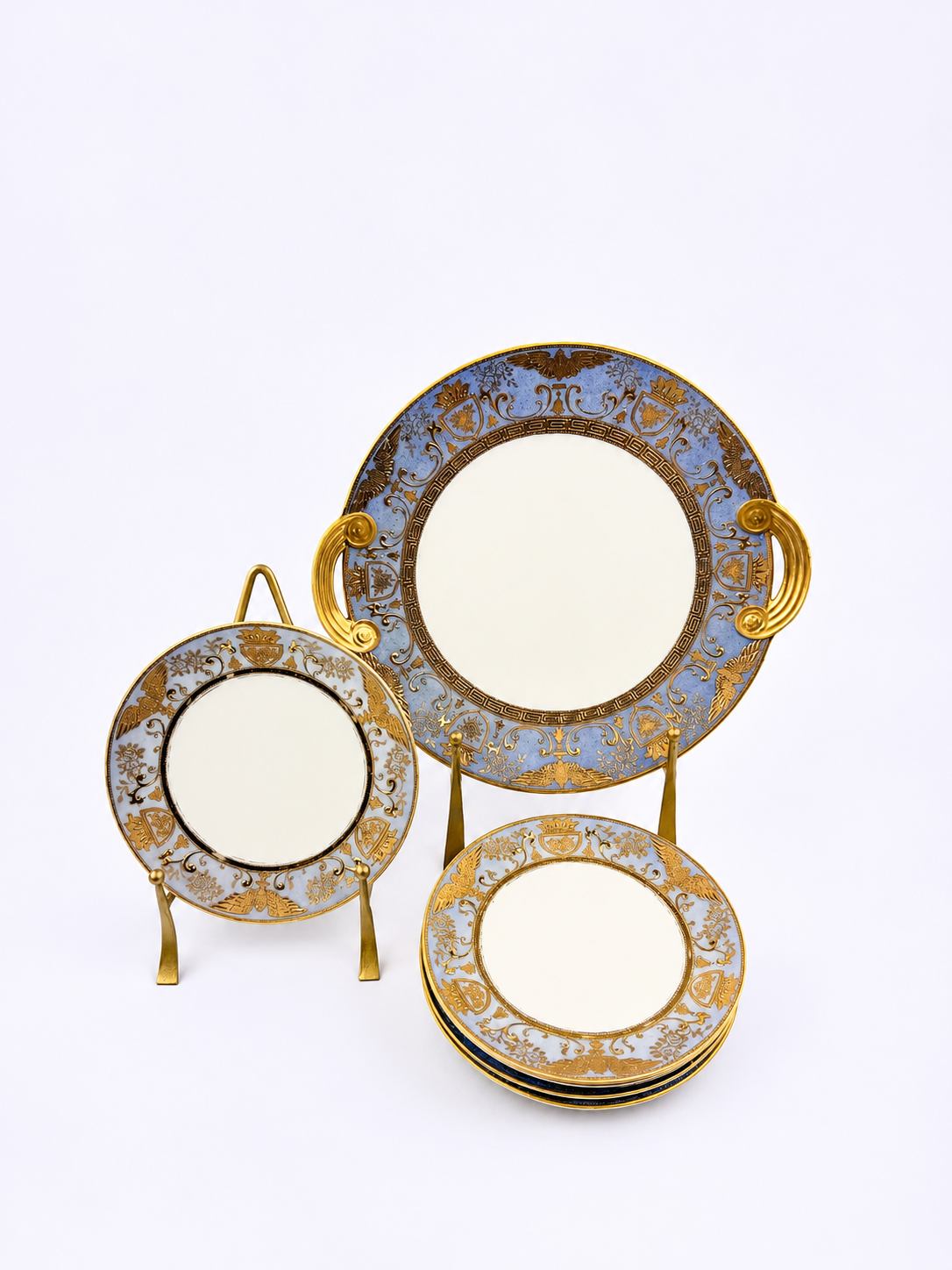
Among the pieces of the site is a service for Noritake Nippon cake, with gold ornamentation in relief. Another core features the Black & Gold Deer tea service and sachet cups decorated with golden deer on black background. This unusual motif distinguishes the preserved specimens in the Acervo.
The inventory also records a red-rouble coffee service with floral medallions and a green cross-section with floral decoration and golden details. These pieces demonstrate the variety of decorative languages associated with the manufacture. Their bases offer another possibility of comparison: to observe how the Noritake identity was recorded at different periods.
Antes de atribuir uma data a uma Noritake, vale fotografar a marca completa no verso, registrar a decoração e observar o formato da peça. A letra M e as palavras Nippon ou Japan são pistas de períodos e mercados de exportação, mas exigem comparação com exemplares documentados.
In a Noritake, a small inscription can bring together the history of a Japanese family, the export markets and the domestic trajectory of the piece.
Related readings
Documents and pages of the Acervo used as an editorial or in-depth basis. Do not replace catalogues of manufacturers and primary sources when required by historical identification.
- Noritake Co., Ltd. — Corporate DevelopmentInstitutional history of manufacturing, from 1904 to the first full dinner service produced in 1914.
- Noritake — History of the brand since 1904 (Brazil)History of the trade initiated by the Morimura brothers in 1876 and the formation of the manufacture in 1904.
- Japan Porcelain Society — Old Noritake BackstampsSpecialized research on brands, approximate dates, destination countries, materials and product types, including sheet of board, M-Nippon and M-Japan.
- Noritake Museum — Educational material on the brand and ancient porcelain (2022)Illustrated publication of the museum with historical example of decorated porcelain and leaf mark.
- International Nippon Collectors Club — Backstamps, revised March 2022Nippon era marking guide, including the dashboard, the letter M and warnings about reproductions of historic marks.
Objects related to this research
Noritake · Nippon Cake Service
Japan • Beginning of the 20th century
Porcelain cake service, with gold decoration in relief.
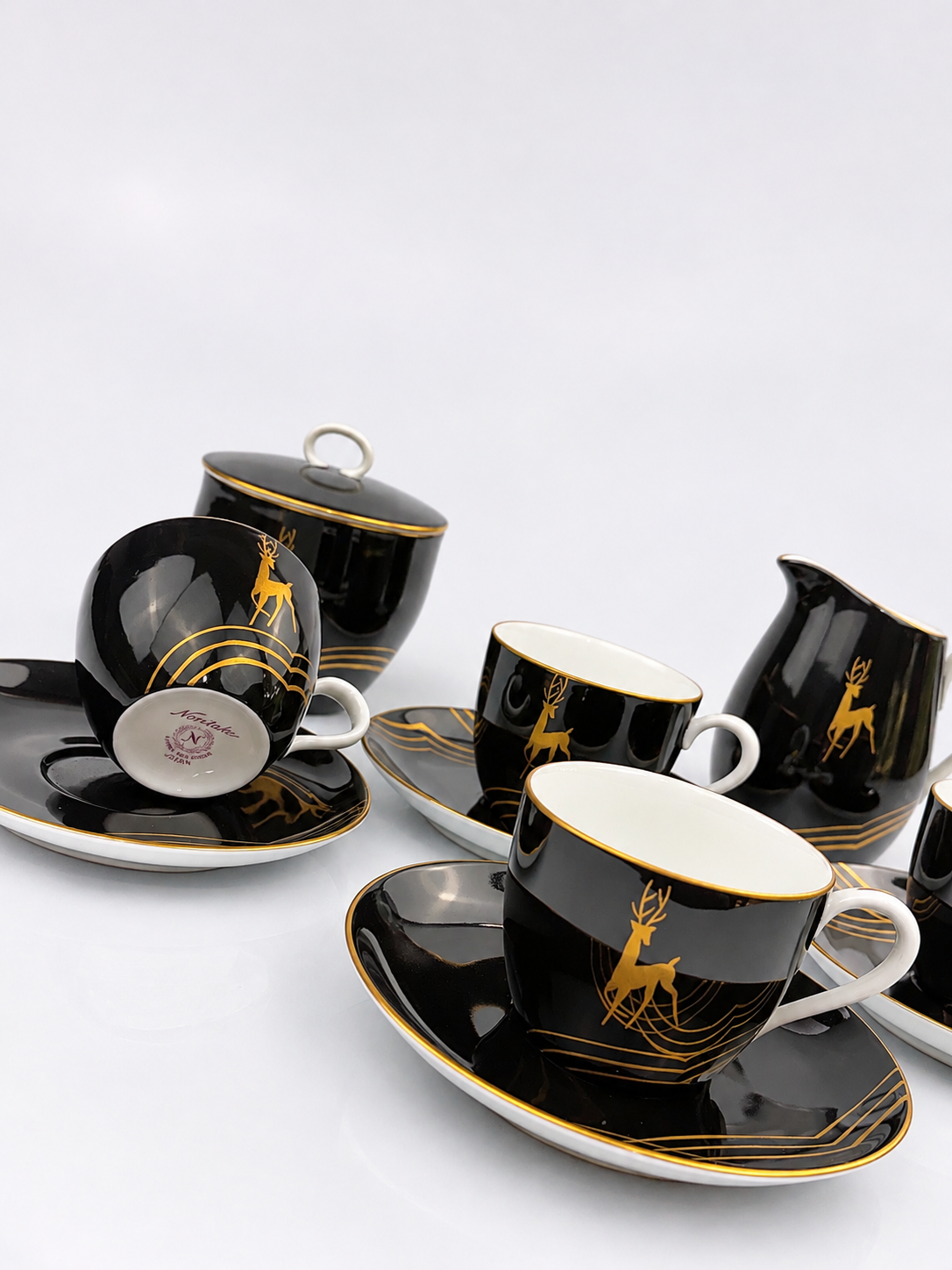
Noritake • Black & Gold Deer Coffee Service
Japan • c. 1947-1952
Coffee service in black and white porcelain, with deer and golden fillets.
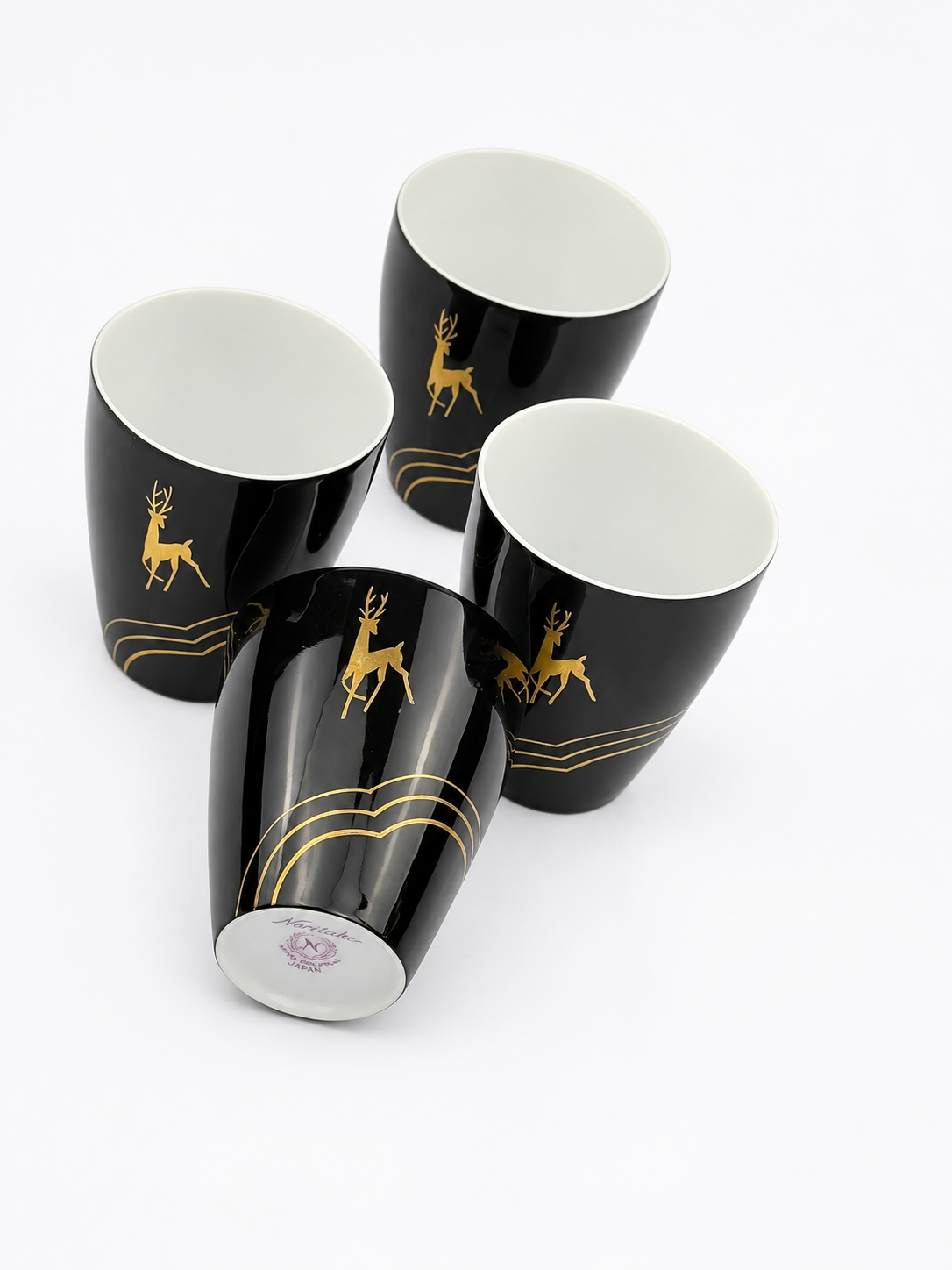
Noritake • Four Cups of Black & Gold Deer Sack
Japan • c. 1947–1952
Four cups in porcelain with deep black enamel and golden deer.
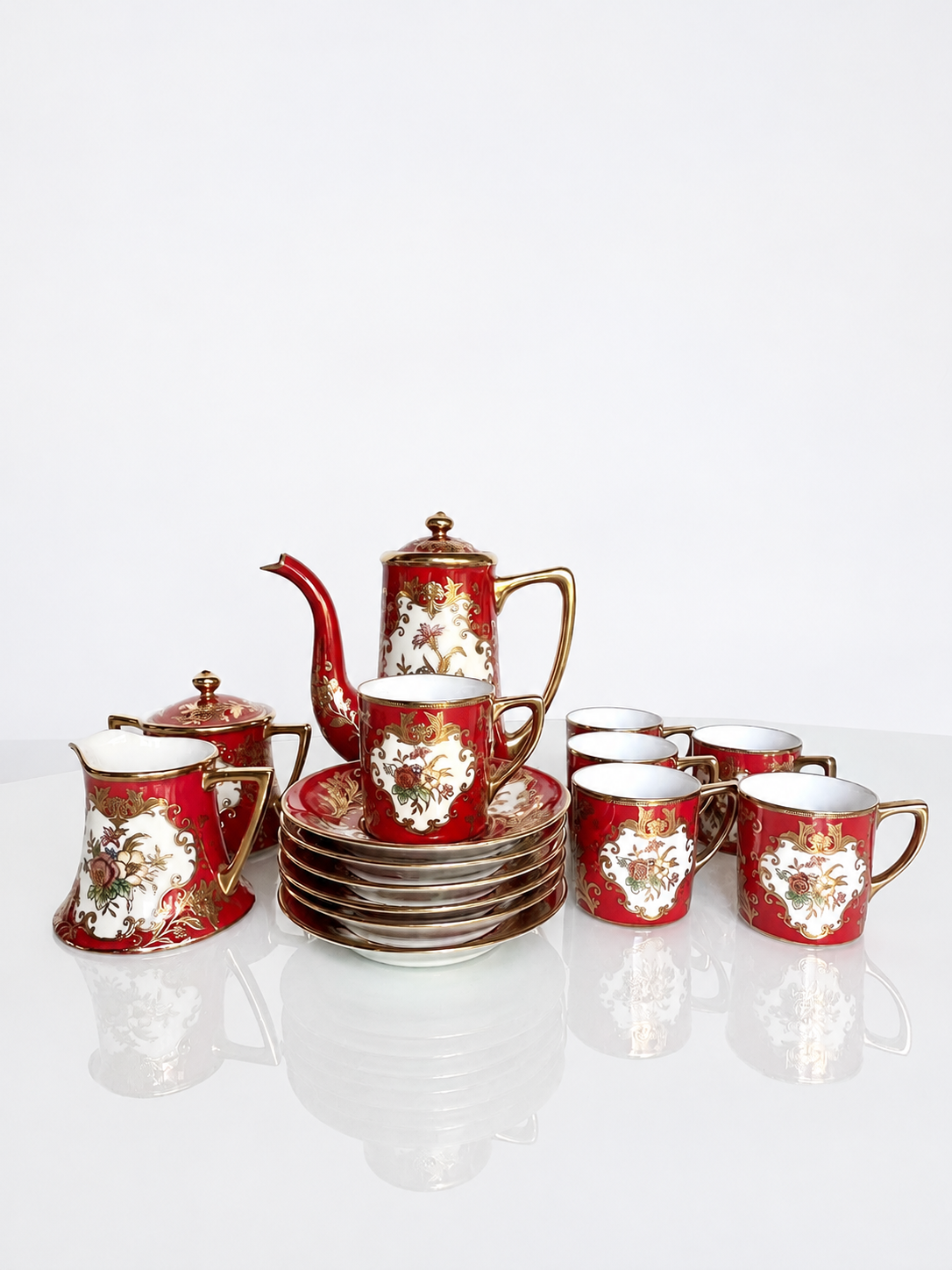
Noritake · Ruby-Red Coffee Service
Japan • Beginning of the 20th century
Coffee service in red porcelain, with floral medallions, cups and containers to serve with golden details.
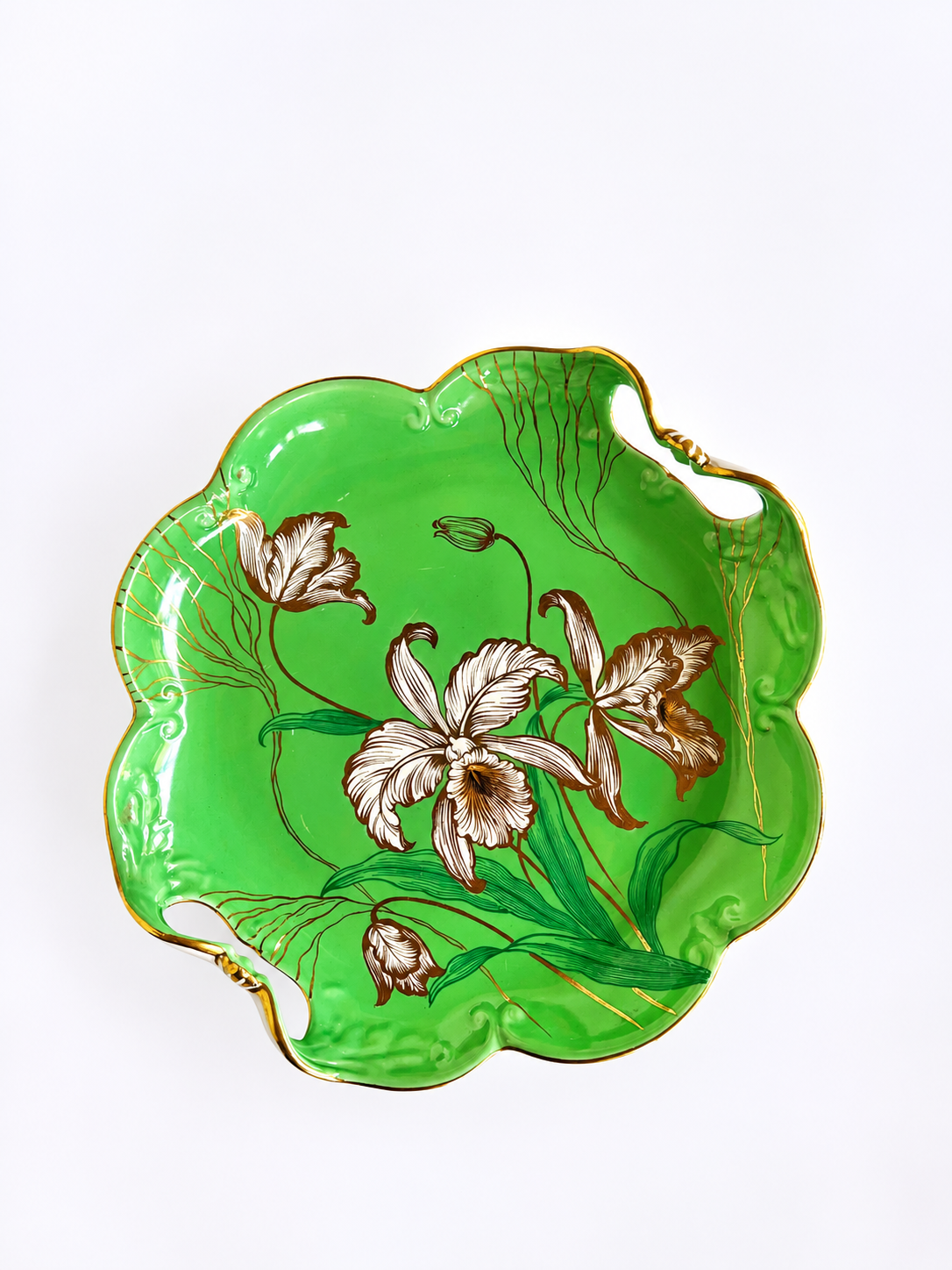
Noritake · Absinthe-Green Serving Platter
Japan • Beginning of the 20th century
Cut edge beam, decorated in green with clear flowers and golden details.