
Gamela: the wood and the gesture of sharing
The gamela brings together the history of Brazilian utensils, the shared table and a coincidence of names in the Cidade Matarazzo.
Pesquisa e curadoria: Jorge Feitosa e Fábio Garcia
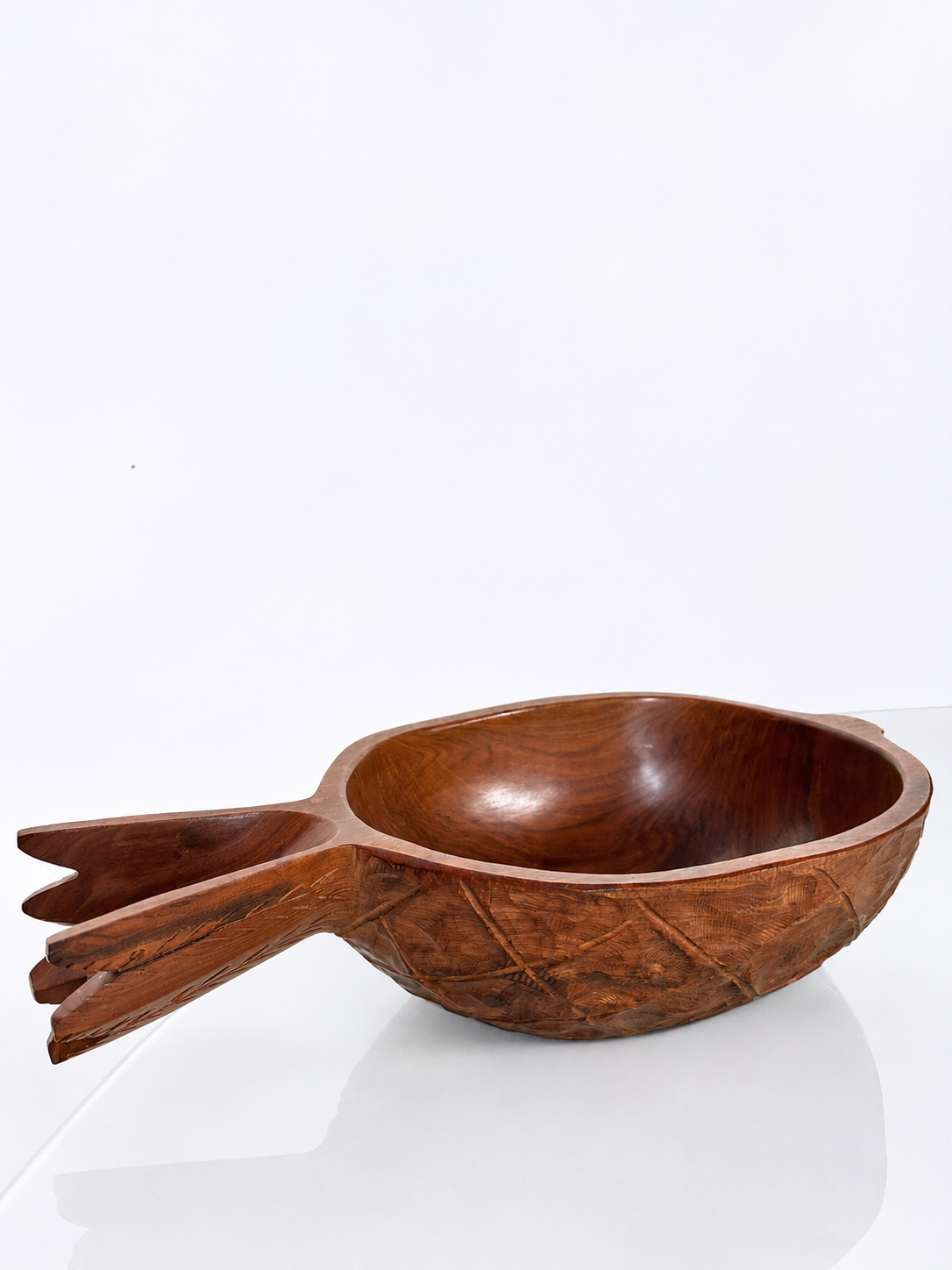
A concavidade escavada, os veios do jacarandá e o formato oval tornam esta gamela brasileira do século XX imediatamente reconhecível. Reunida pelo Acervo Jorge Feitosa, a peça associa o trabalho da madeira ao uso doméstico de recipientes destinados a acolher alimentos. A expressão “comer da mesma gamela” conserva na língua a ideia de convivência e partilha.
The table that is shared
In different Brazilian regions, the gamela served to prepare, transport and offer food. Excavated in wood, it could occupy the center of a table or be part of the activities of the kitchen. The format changed according to the use and techniques of each region.
One of its cultural senses is that of a shared container. The expression ☆comer of the same gamela 我 designates, in Portuguese, close coexistence or sharing of interests. The word does not literally mean sharing, but its uses and expressions preserve this association.
Objects and techniques in museum records
The collection of the Museum of Folklore Edison Carneiro preserves gamelas from various Brazilian origins. Among them are examples of jacarandá with spoons, by Rita Ferreira de Souza, identified in records of the collection as gamelas de petisco.
The preserved specimens in museums show the variety of shapes and finishes. The wood, with its veins and tones, participates both in the structure and the ornamental aspect of these containers.
The copy of the Acervo
A gamela do Acervo é uma peça escultórica brasileira do século XX, em jacarandá, com corpo oval escavado, prolongamentos em uma extremidade e ornamentação na superfície externa. O trabalho da madeira organiza a forma e dá presença ao recipiente.
In the wood trade, the name jacarandá designates different species. One of them is the jacarandá-da-bahia, Dalbergia nigra, called Brazilian rosewood in English. The variety of names helps to understand the historical vocabulary of wood objects in Brazil.
Rosewood and City Matarazzo
A gamela integra a seleção do Acervo na Mata Lab, na Cidade Matarazzo, onde também está o hotel Rosewood São Paulo. A coincidência entre o nome inglês associado a algumas madeiras e esse endereço é uma curiosidade da apresentação atual, não uma pista sobre a fabricação do objeto.
O que distingue a gamela é a madeira escavada, com corpo oval, veios aparentes e ornamentação externa. A designação comercial jacarandá não confirma, por si só, a espécie botânica. Na Mata Lab, a peça pode ser apreciada pelo desenho e por sua ligação com o costume brasileiro de compartilhar alimentos.
Related readings
Documents and pages of the Acervo used as an editorial or in-depth basis. Do not replace catalogues of manufacturers and primary sources when required by historical identification.
- Folklore Museum Edison Carneiro — game recordsPopular culture record with wooden gamella records, including jacarandá copies.
- Royal Botanical Gardens, Kew — Dalbergia nigraBotanical identification of the bahia jacarandá; does not prove the species of the specimen.
- Rosewood São Paulo — Official WebsiteLocation of the hotel in the Cidade Matarazzo.
- Acervo Jorge Feitosa — gamela tabFormal description and location of the part in the catalogue.
- Porto Editora — Infopedia Dictionary, gamelaIt records the etymology and the expression 'eat the same gamela', linked to coexistence and sharing of interests.
Objects related to this research
Gamela Escultórica em Jacarandá Brasileiro
Brasil • século XX • Jacarandá
Gamela brasileira vintage em jacarandá, com corpo oval escavado, prolongamentos em uma das extremidades e ornamentação geométrica na superfície externa. O trabalho da madeira acentua o desenho escultórico do recipiente.