Why put pheasants in the middle of a dining table?
From the European table tops to the composition of a luncheon of the Avervo: the history of table sculptures and the gesture of receiving.
Pesquisa e curadoria: Jorge Feitosa e Fábio Garcia
No centro de um almoço preparado por Jorge Feitosa e Fábio Garcia, um par de faisões prateados ocupou lugar entre porcelanas da Real e metais da Eberle e da Wolff. As esculturas integram o histórico curatorial do Acervo. A escolha tem precedentes nas mesas europeias, onde figuras de animais e centros ornamentais participavam dos jantares. Aqui, a história ganha uma continuação concreta: os objetos voltaram a acompanhar uma refeição.
The table before the meal
Before the arrival of the guests, the disposition of objects was already part of the experience of receiving. In European aristocratic residences, the table could gather porcelains, metals and ornamental elements organized according to conventions that have changed over time.
Large dessert compositions, mirrored bases, candlesticks and sculptures occupied the center of dinners in different times. This story helps to understand the choice of curators to put a pair of silver pheasants in the middle of a contemporary lunch.
What was a table especially?
The French term, especially table, designates a table centre that could gather mirrored bases, chandeliers, containers and sculptural elements. Cooper Hewitt, Smithsonian Design Museum, preserves a copy made by Pierre-Philippe Thomire around 1810, in gold bronze, glass and mirror. Its composition shows the relationship between ornamentation, light and ceremony at the European table of the period.
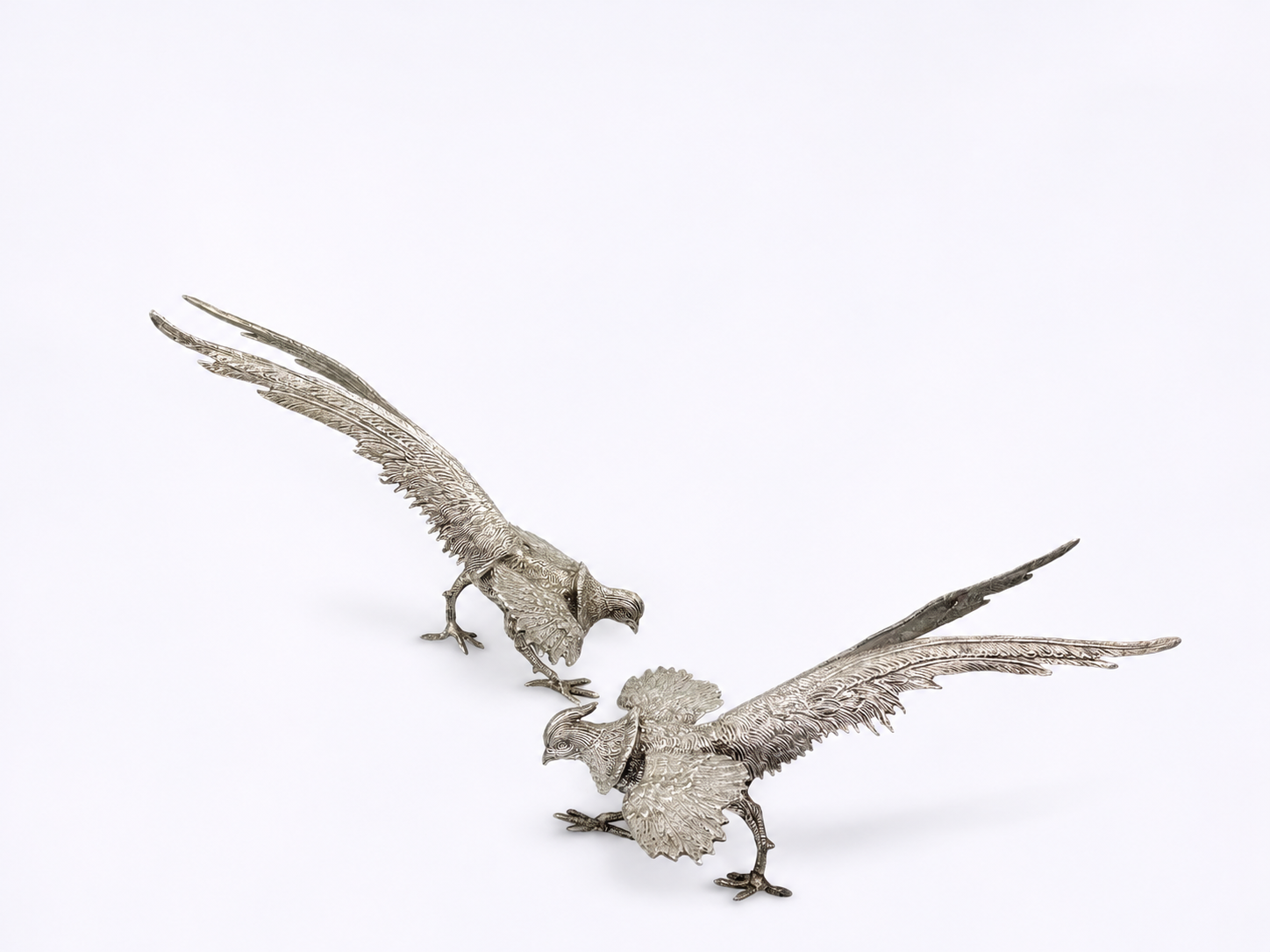
The pair of Acervo pheasants was used by curators as a reference to this tradition of table centers, in a composition of its own. Its presence approximates the figurative sculpture of the act of receiving guests.
Animals and food as sculpture
In 1754, the goldsmith François Thomas Germain produced in Paris La Machine d . Argent, silver table center commissioned by Christian Ludwig II, Duke of Mecklenburg-Schwerin. The work, currently at the J. Paul Getty Museum, represents hunting birds, a rabbit and vegetables gathered as sculptural-dead nature.
The Getty catalogue explains that the piece did not work as a tray, condiments holder or candlestick: its purpose was sculptural. Hunting was part of the cultural universe of the order, and the composition referred both to the food and the landscapes of its property. It is a documented example of how animals could be presented on the table without exercising a utility function.
The Acervo pheasants
The Silver Beams — Table Sculptures, preserved in the history of the Acervo, features open wings and elongated tails. The figures are made of silver-finishing metal and date back to about the mid-20th century.
At lunch organized by the curators, the pheasants returned to the center of the table. Between porcelain and service utensils, the sculptures assumed an ornamental role similar to that which the table centers played in meals of other periods.
Brazilian porcelain and metallurgy on the same table
The Royal Porcelain began its activities in Mauá, in the state of São Paulo, in 1943, according to the historical records of the city. The manufacture participated in the consolidation of a ceramic pole that helped define the industrial identity of the city. In the assembly of lunch, pieces of the Royal introduced this Brazilian chapter of the production of dishes of the twentieth century.
Eberle refers to another industrial trajectory. Founded in Caxias do Sul, Rio Grande do Sul, the company expanded its production for cutlery, cutlery and tableware in 1918. The Historical-Cultural Centre Santa Casa de Porto Alegre retains a dessert fork attributed to Eberle, whose record documents this business history.
The cutlery chosen for lunch was Wolff, from the Scandinavian line. Next to the Royal porcelain and Eberle metals, they participated in a composition that brought together different chapters of Brazilian production for the table.
A table, different trajectories
The pheasants refer to the tradition of figurative sculpture at the table; the Royal porcelain and Eberle metals place part of the composition in the Brazilian industrial history. The differences of origin and period make the encounter between these pieces especially interesting.
In the Jorge Feitosa Accervo, the Memory of Matter also includes this continuity of use. An object can leave an exhibition presentation and re-participate in a domestic meeting, without its origin being altered by the way it is used today.
The historical reference to European overtones helps to understand why sculptures occupied dinner tables, without turning the Acervo pheasants into examples of this category. In the composition of curators, Brazilian porcelain and metallurgy participated in a real lunch. After the table was ready, came the beef bourgignon.
Related readings
Documents and pages of the Acervo used as an editorial or in-depth basis. Do not replace catalogues of manufacturers and primary sources when required by historical identification.
- J. Paul Getty Museum — La Machine d ̈Argent (1754), catalogue French SilverIt records author, order, date, hunting iconography and sculptural function of the table center.
- Cooper Hewitt, Smithsonian Design Museum — Table especially: Sustainability of Political PowerIt analyses the presentation of the banquets and the table centre of Pierre-Philippe Thomire, c. 1810.
- Maua Prefecture — Historical NotesIt records the foundation of the Royal Porcelain in 1943 and the local ceramic development.
- Historical-Cultural Centre Santa Casa de Porto Alegre — Eberle dessert forkThe museum register of Eberle and its production of cutlery from 1918.
- Opinion Jorge Feitosa — Silver Beam PairRegistration of the Acervo copies, with description and approximate date; does not establish its original function as above.
- Opinion Jorge Feitosa — The Great TableThematic collection of objects related to the ritual of receiving.
Objects related to this research
Pair of Silver-Tone Pheasants · Table Sculptures
Silver metal • c. 1950
Pair of pheasants with open wings and elongated tails, in silver finish metal.
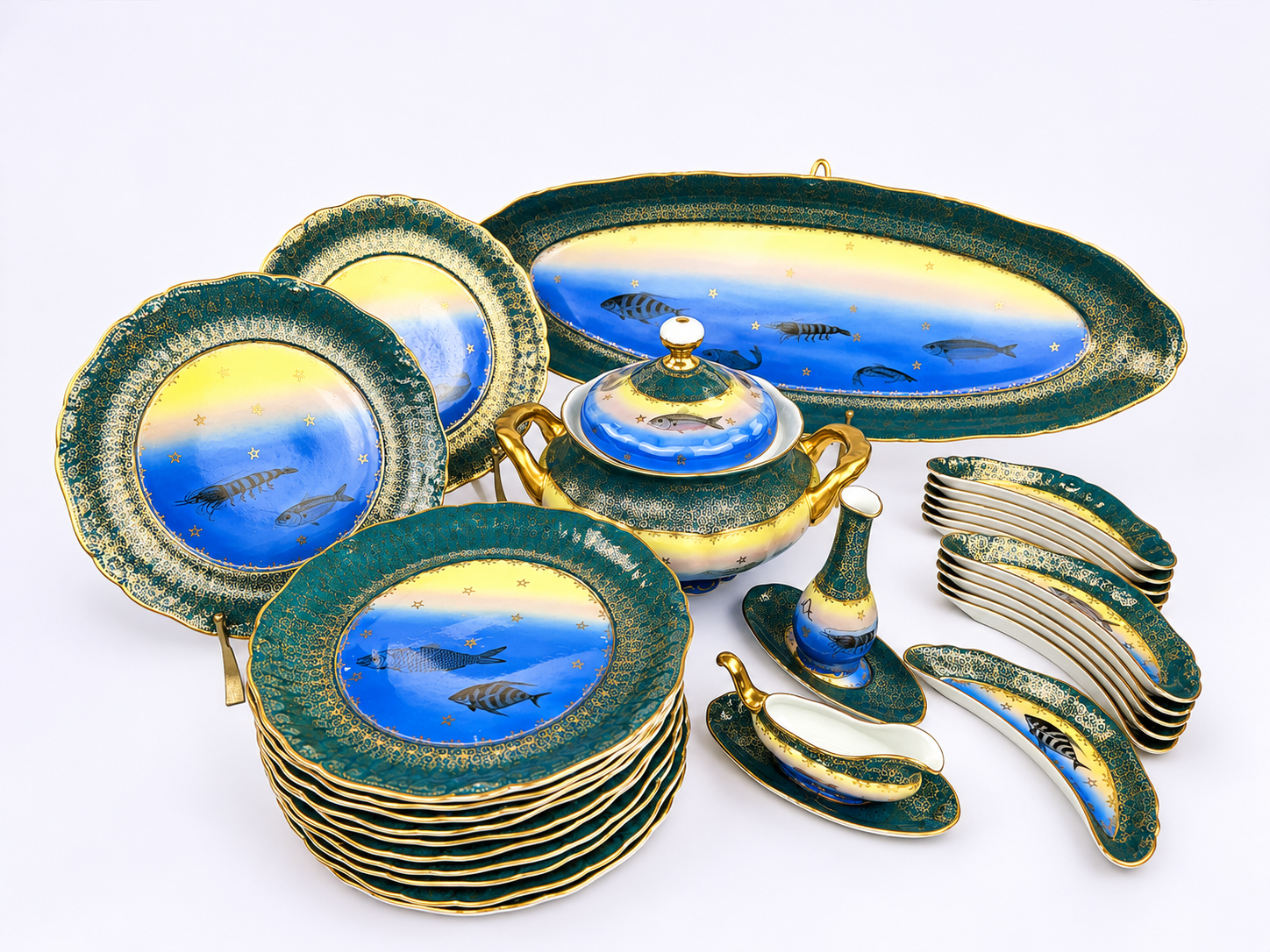
Royal Porcelain • Fish Service
Mauá, SP • Mid-twentieth century
Porcelain service with fish, blue fields in gradient and gold.
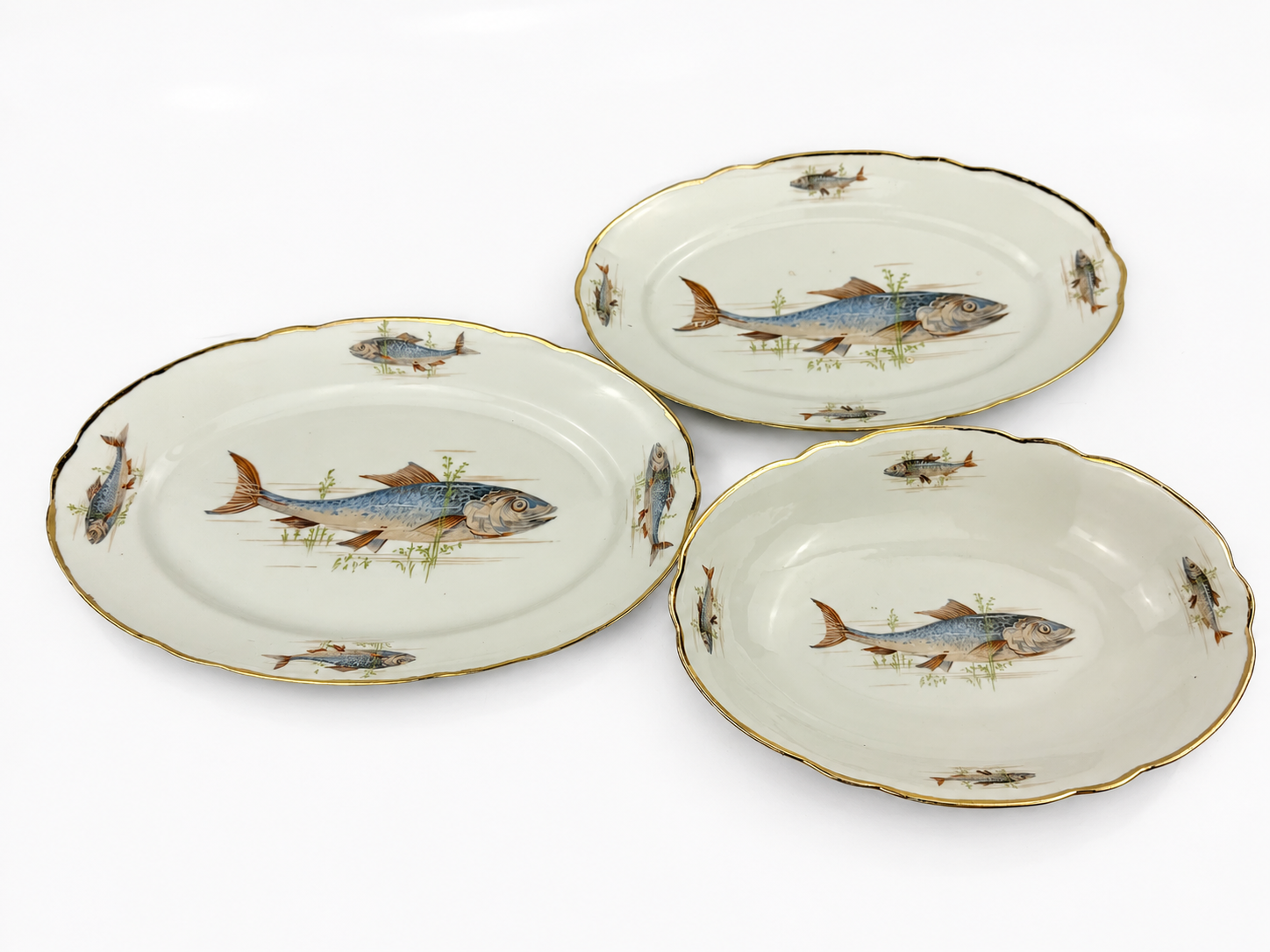
Porcelana Real · Three Fish Serving Platters
BRAZIL • SECOND XX • DECORATED PORCELANA
Three oval crossbows with wavy edges, golden fillets and naturalist illustrations of fish in blue tones. The set is intended for serving fish.
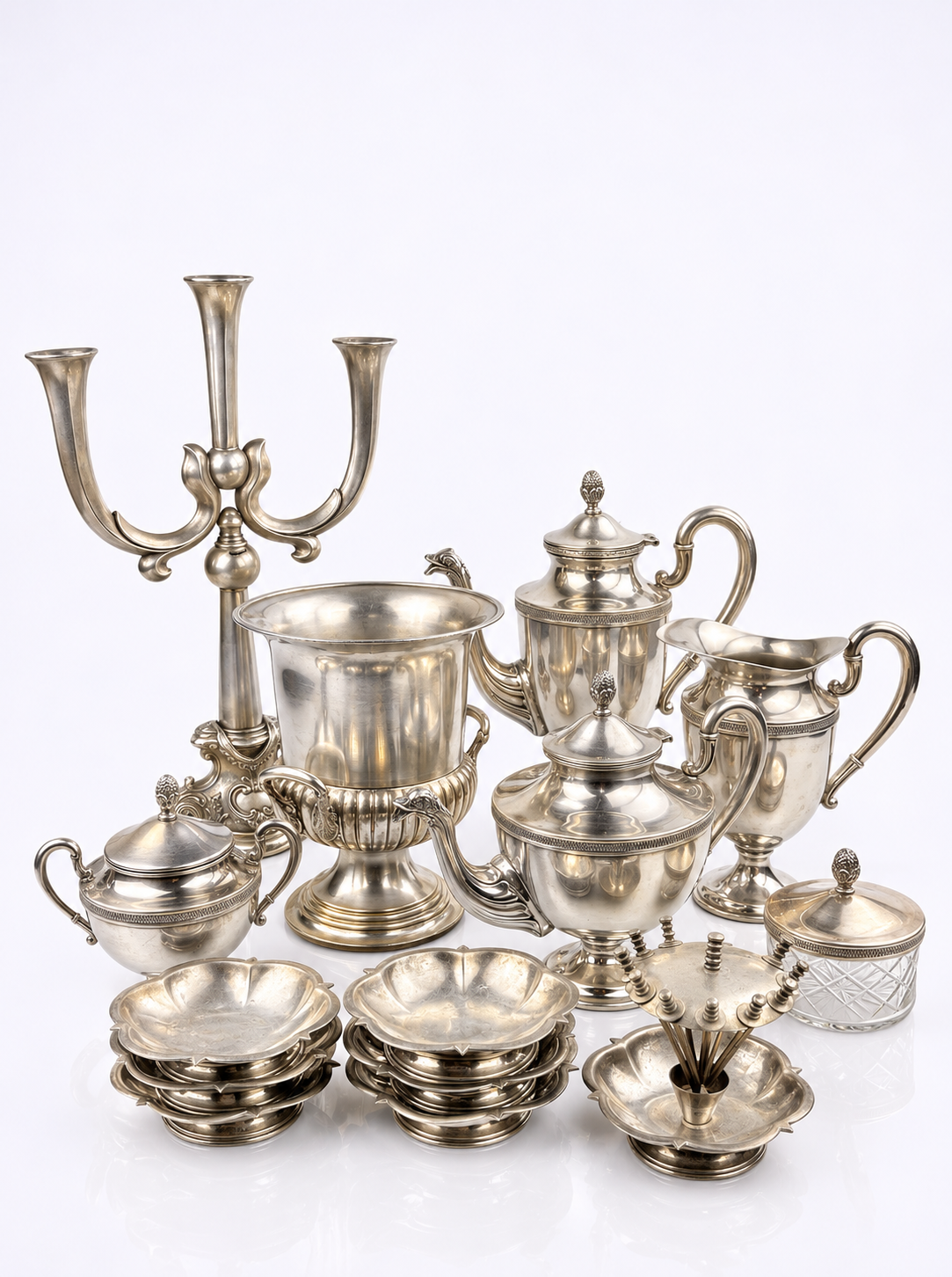
Eberle · Coffee Service, Serving Ware and Lighting Pieces
South Caxias • 20th century
Selection of Eberle silver items including coffee service, beverage container and candlesticks.