Even the spines had their own plate.
From the 19th century European table to the Royal Mauá Porcelain: the history of fish services and objects created for a meal.
Pesquisa e curadoria: Jorge Feitosa e Fábio Garcia
Houve um tempo em que até as espinhas tinham seu próprio prato. A espinheira, muitas vezes em forma de meia-lua, ficava ao lado do prato principal para receber restos de peixe. Esse pequeno objeto abre a história dos serviços de mesa especializados do século XIX e de sua circulação posterior. No Acervo Jorge Feitosa, a pesquisa encontra serviços brasileiros da Porcelana Real e exemplares franceses de Lunéville, cada um com materiais e decorações próprios.
When dinner began to be served in chapters
In the 19th century, service to the Russian, or service to the Russian, gained space in formal European meals. Soups, fish, meats and desserts were offered successively, instead of occupying the table at the same time.
The change favored the production of specialized utensils. The fish could arrive whole on an extended traverse, accompanied by a sauce, individual dishes and cutlery suitable for separating the meat from the spines.
Fish, algae and aquatic plants also appeared in the decoration. The motifs visually identified a piece intended for that stage of the meal, although the composition of each service varied according to the factory and the order.
The little half-moon next to the plate
Among the tools of this repertoire are the bone dishes, bone dishes often called spinach when used in the service of fish. The Getty Research Institute describes these small containers, common in the 19th century, often in the form of a growing.
The curve accommodated the plate in half-moon next to the main, occupying little space. Sydney Living Museums keeps copies of a domestic service from the late 19th century and records its use to receive spines.
The same way could serve other purposes. A label manual from 1890, quoted by Australian researchers, described the growing container as a container to keep cold foods separate from hot foods. A relatively simple drawing was used to meet different table habits.
Fish represented for a table of many species
The European manufactures produced services with fish of different species painted on each dish, often accompanied by aquatic plants or marine landscapes. The decoration accompanied the object's purpose.
An example is at the Metropolitan Museum of Art. In 1879, the American First Lady Lucy Webb Hayes commissioned Haviland, from Limoges, a service for the White House. Theodore Russell Davis designed animals and plants from North America to decorate the pieces.
The fish appeared on the dishes for this stage of dinner; other species were chosen for meat and poultry parts. The drawings made in the United States were adapted to the manufacture of porcelain in France.
The fish already had place at the Brazilian tables of the nineteenth century
The circulation of these services is also recorded in Brazilian history. Historian Heloisa Barbuy, in a study published in Varia Historia magazine in 2019, investigated the trade in French porcelain for the eight hundredth of Brazil.
Among the documents analyzed is an order made in 1888 for the Count of Pinhal: 1,018 pieces of 21 different types, including dishes, soups, watermelons and four traverses specifically intended for fish.
At the National Historical Museum, a fish cross of British porcelain Derby, about 67 centimeters long, offers another material record of the presence of these utensils in Brazil. At the tables of wealthy families, the imported dishes included the ritual of receiving.
From European porcelain to Real production
In the 20th century, Brazilian manufactures began to offer their own interpretations of fish services. Among them was Royal Porcelain, from Mauá, in São Paulo.
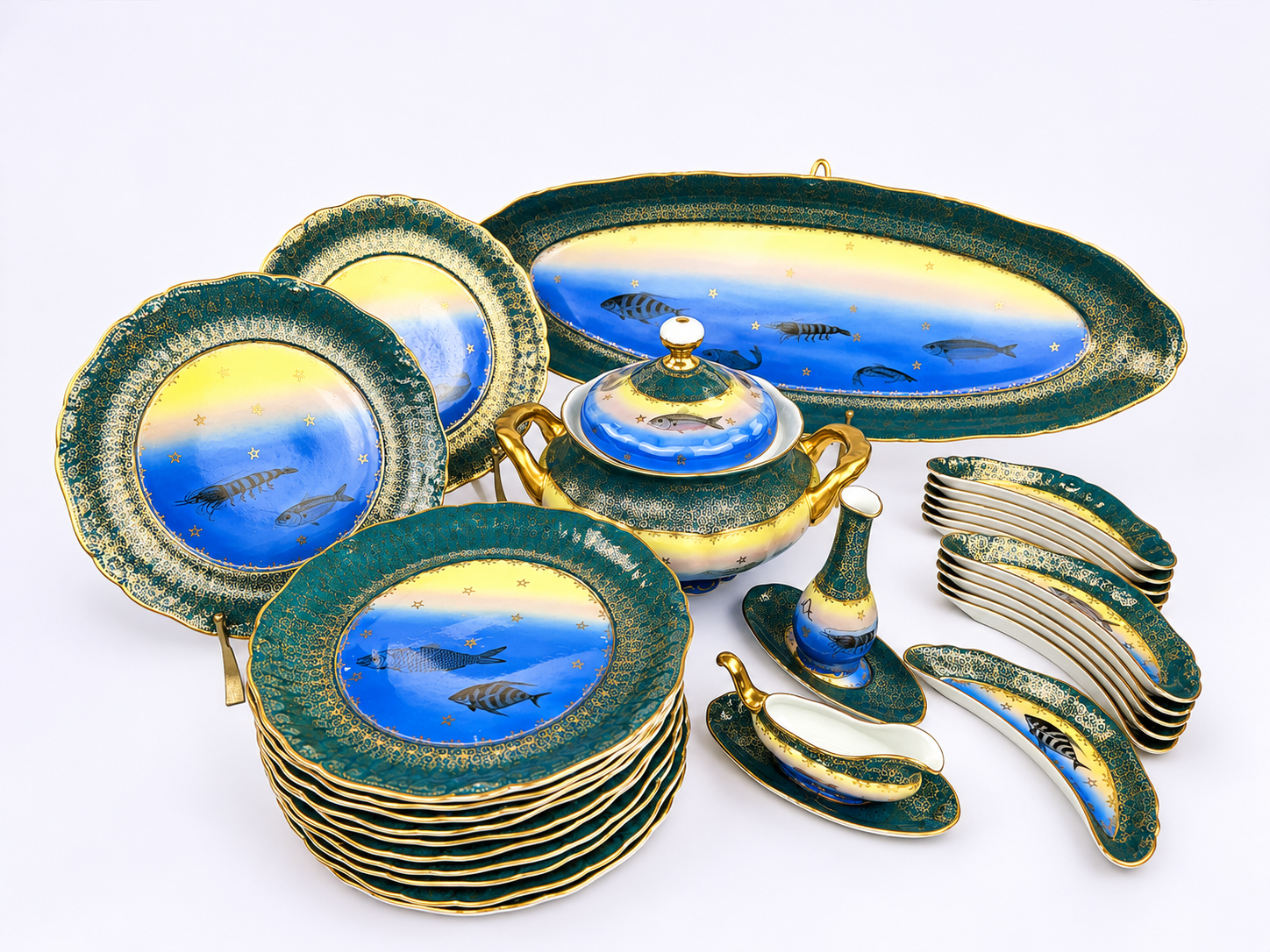
The Acervo brings together a service of the Royal with drawings of fish, blue fields in gradient and gold. Another set presents three oval traverses with wavy edges and naturalist illustrations of fish in blue tones.
Inter-American porcelain and steatita also appear in the Acervo selection, with cross-sections decorated with fish and crustaceans. The differences in shape and finish show how this repertoire developed in national production.
French fascination also tells this story
K&G Lunéville, France, is represented by an extended fish decoration cross-section and a faience service that integrates the Acervo's history. The material, the modeling and the design of the edges allow them to be compared to the white porcelain of the Real.
The function brings these objects closer together: all were designed to present food at the table. The differences in material and ornamental treatment record choices peculiar to each manufacture.
The sauces complete the comparison. The Acervo retains three identified specimens such as K&G Lunéville, M.S. Berry and Porcelain Real. Its shapes show different solutions to serve sauces during the meal.
What happens when the function disappears?
Today, a fish cross can be used without the rest of the service. A dish decorated with a trout can be exposed, while the saucer returns to the table on another occasion. The objects continue to circulate even when the original ritual changes.
Small half-moon dishes also arouse curiosity about the shape. Knowing its function allows you to see how the design responded to specific eating and receiving habits.
A pequena meia-lua lembra que até a retirada das espinhas ganhou um utensílio próprio nas mesas de outros tempos. Hoje, reconhecer essa função ajuda a olhar de outra maneira para serviços de peixe, travessas e molheiras. Nos exemplares brasileiros, a pesquisa acrescenta a produção de porcelana de Mauá e suas distintas manufaturas.
Related readings
Documents and pages of the Acervo used as an editorial or in-depth basis. Do not replace catalogues of manufacturers and primary sources when required by historical identification.
- Getty Research Institute — Art & Architecture Thesaurus: bone diskesFunctional definition of bone dishes; documents use in the 19th century and the frequent format in increasing.
- Sydney Living Museums — A bit on the side (2016)A study of preserved flat dolls at Rouse Hill House, with references to label manuals from 1890 and 1922.
- Musée d'Orsay — The Art of Eating in the 19th CenturyContextualization of the transition from service to French to service to Russian and the specialization of utensils to table.
- The Metropolitan Museum of Art — Fish Plate (Black Bass), Theodore Russell Davis and Haviland & Co., c. 1879–1880Service part registration created for the White House, with decoration chosen according to the stage of the meal and documentation of the decorative techniques.
- Heloisa Barbuy — A commercial-cultural system for importing French table porcelain into 19th century Brazil, Varia Historia (2019)Documentary research on the service of the Count of Pinhal ordered in 1888: 1,018 pieces and four fish-specific traverses.
- National Historical Museum — Fish Trawl, register 003495Museum record of British porcelain cross, identified as Derby, 67 cm long.
- Debrett's — A fishy businessHistory of service to the Russian, the multiplication of specialized tools and the use of fish cutlery.
- Acervo Jorge Feitosa — Porcelana Real: os peixes azuis feitos em MauáLeitura complementar sobre a história industrial da Real, Fritz Erwin Schmidt e os serviços de peixe produzidos em Mauá.
Objects related to this research
Royal Porcelain • Fish Service
Mauá, SP • Mid-twentieth century
Porcelain service with fish, blue fields in gradient and gold.
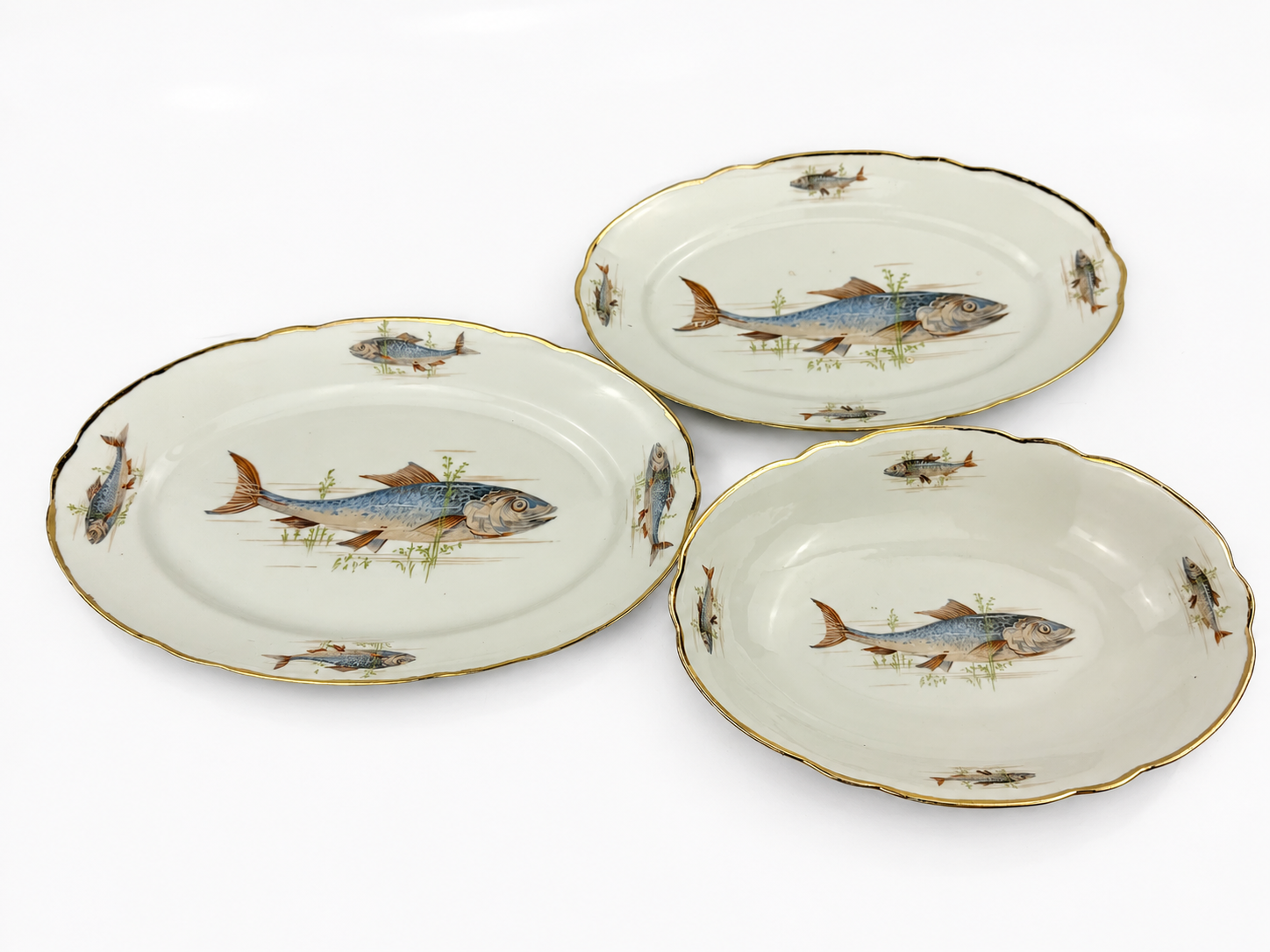
Porcelana Real · Three Fish Serving Platters
BRAZIL • SECOND XX • DECORATED PORCELANA
Three oval crossbows with wavy edges, golden fillets and naturalist illustrations of fish in blue tones. The set is intended for serving fish.
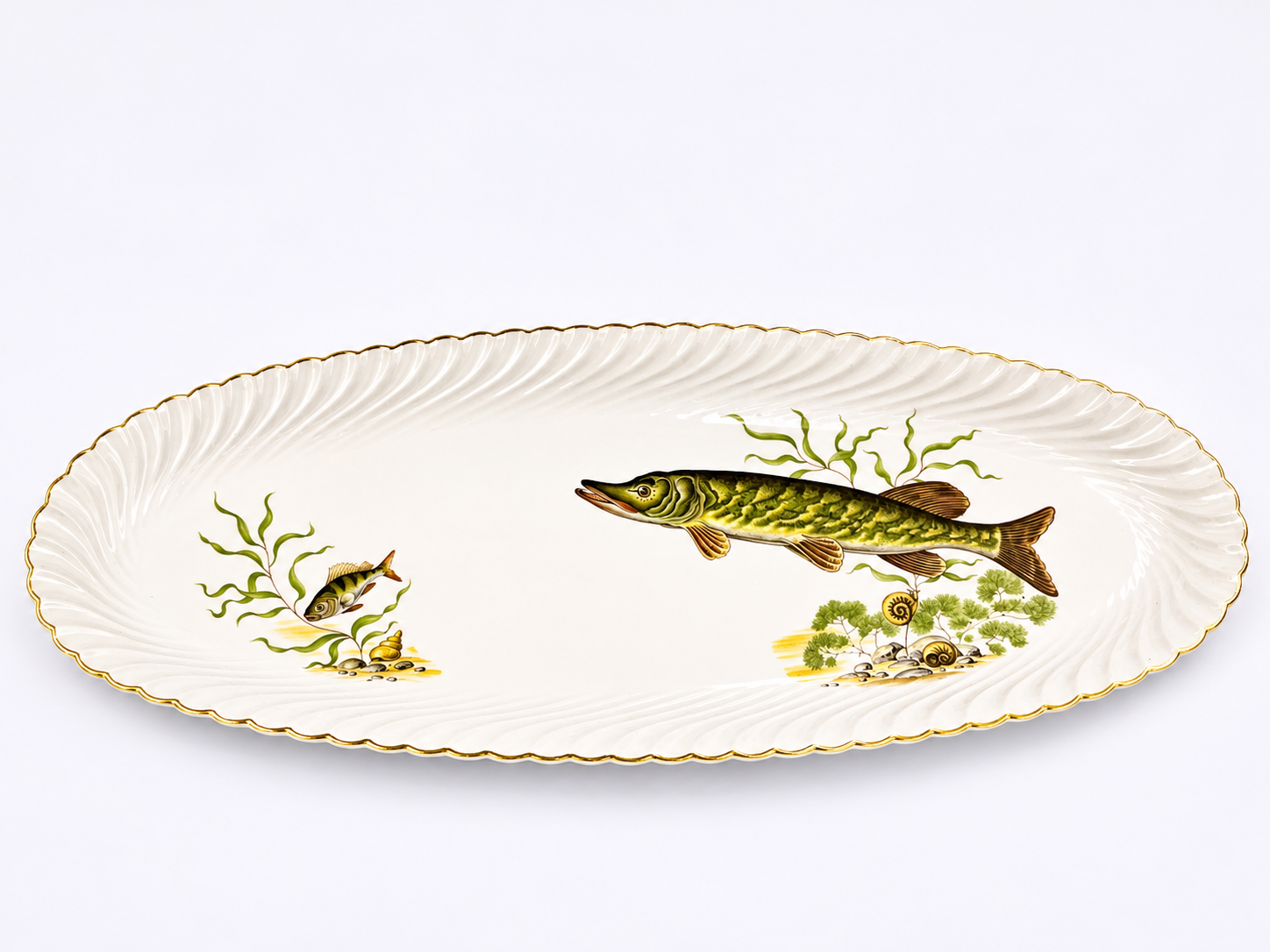
K&G Lunéville · Fish Serving Platter
France • Beginning of the 20th century
Long shape, cinnamon edge and naturalist decoration of fish.
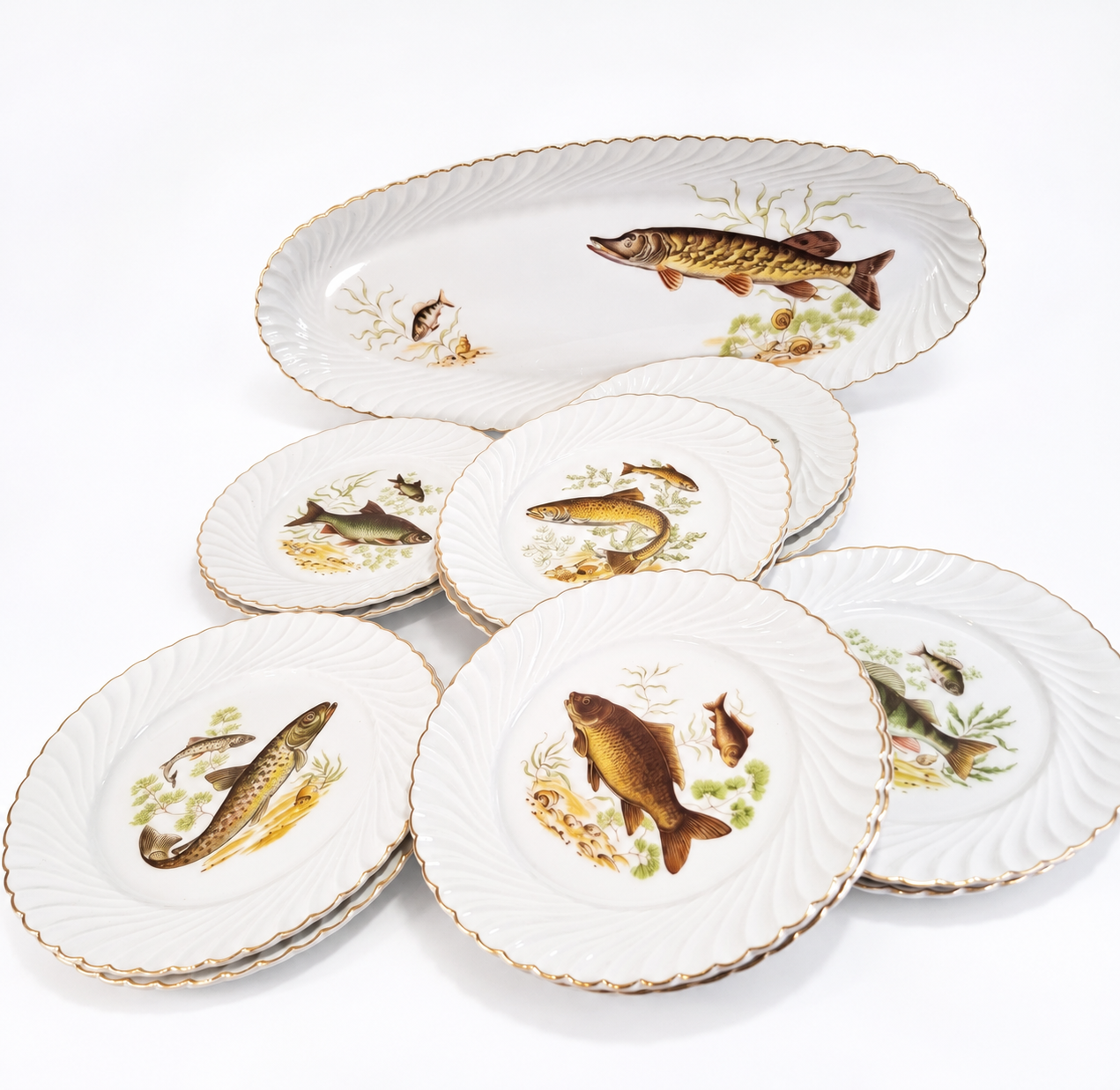
K&G Lunéville · Fish Service
France • 20th century
Bean service with large cross dish and dishes decorated with fish.
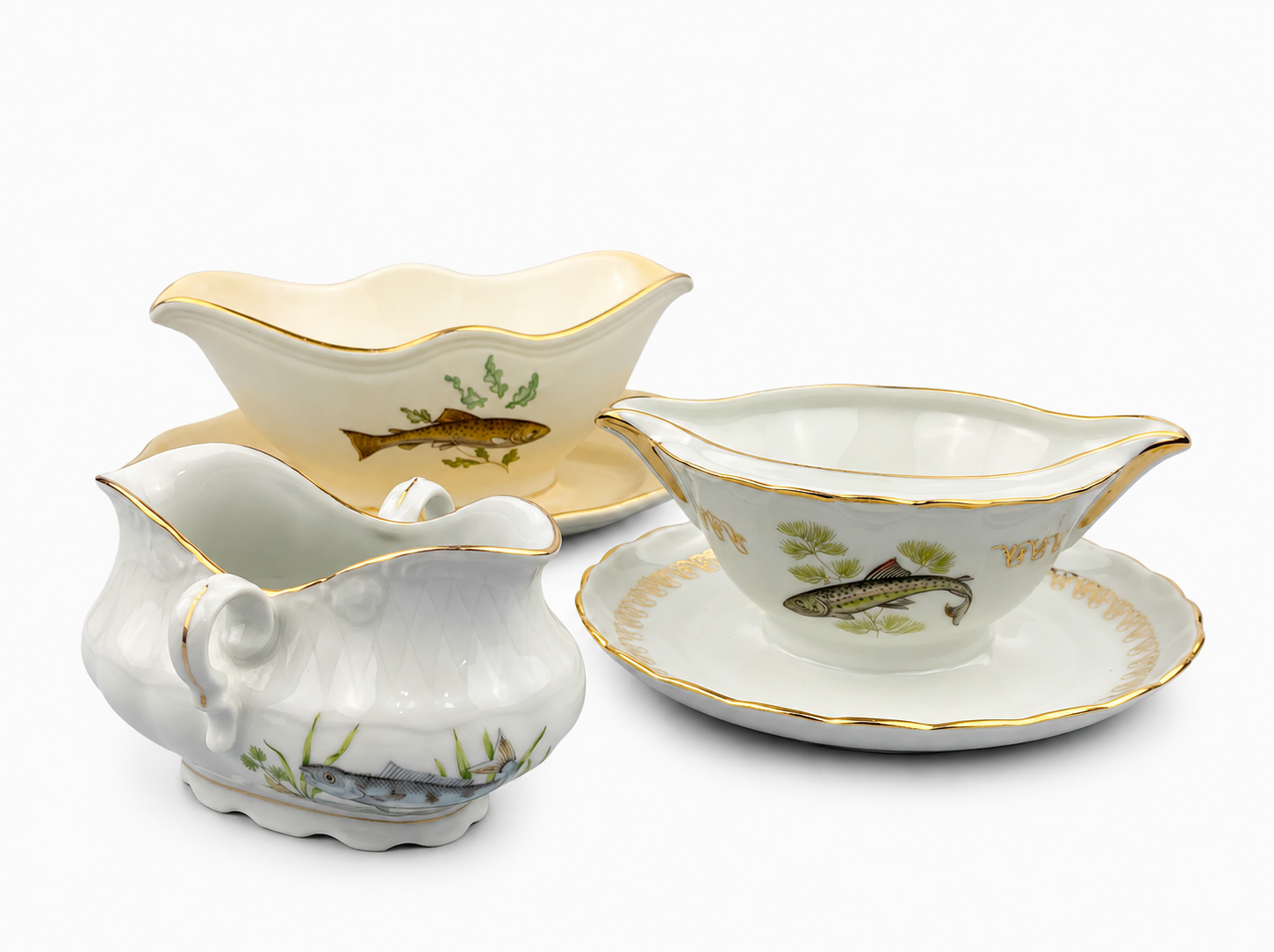
Three Sauce Boats · K&G Lunéville, M.S. Berry and Porcelana Real
FRANCE AND BRAZIL • XX SECOND SECOND • DECORED PLACE
Selection of three watermelons identified as K&G Lunéville, M.S. Berry and Porcelain Real. The pieces have different shapes, fish illustrations and aquatic vegetation and golden fillets.
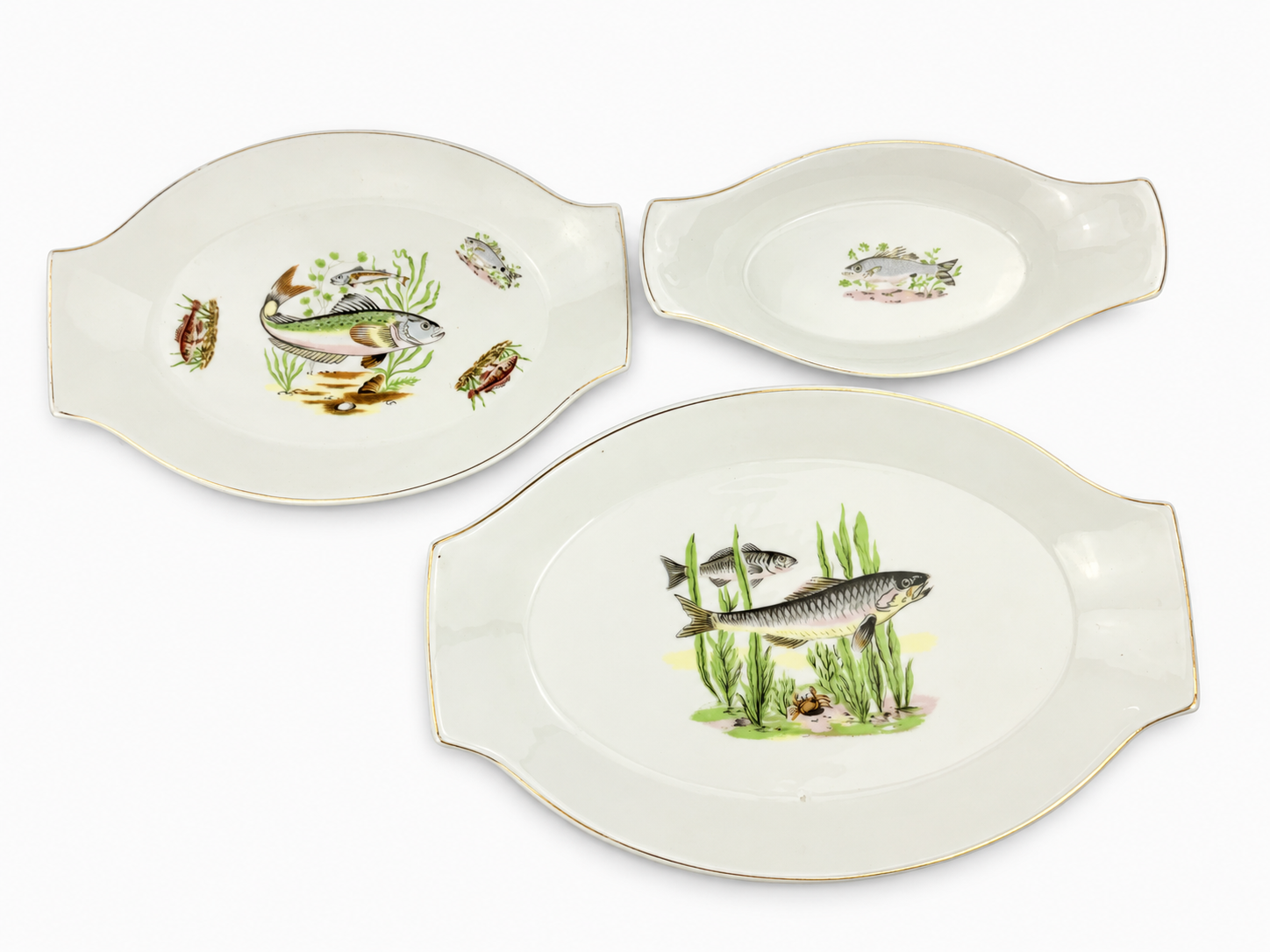
Porcelana Interamericana · Three Fish Serving Platters
BRAZIL • SECOND XX • DECORATED PORCELANA
Set of three oval crossbows with elongated ends and fish illustrations and aquatic vegetation. The edges are bounded by golden fillets.
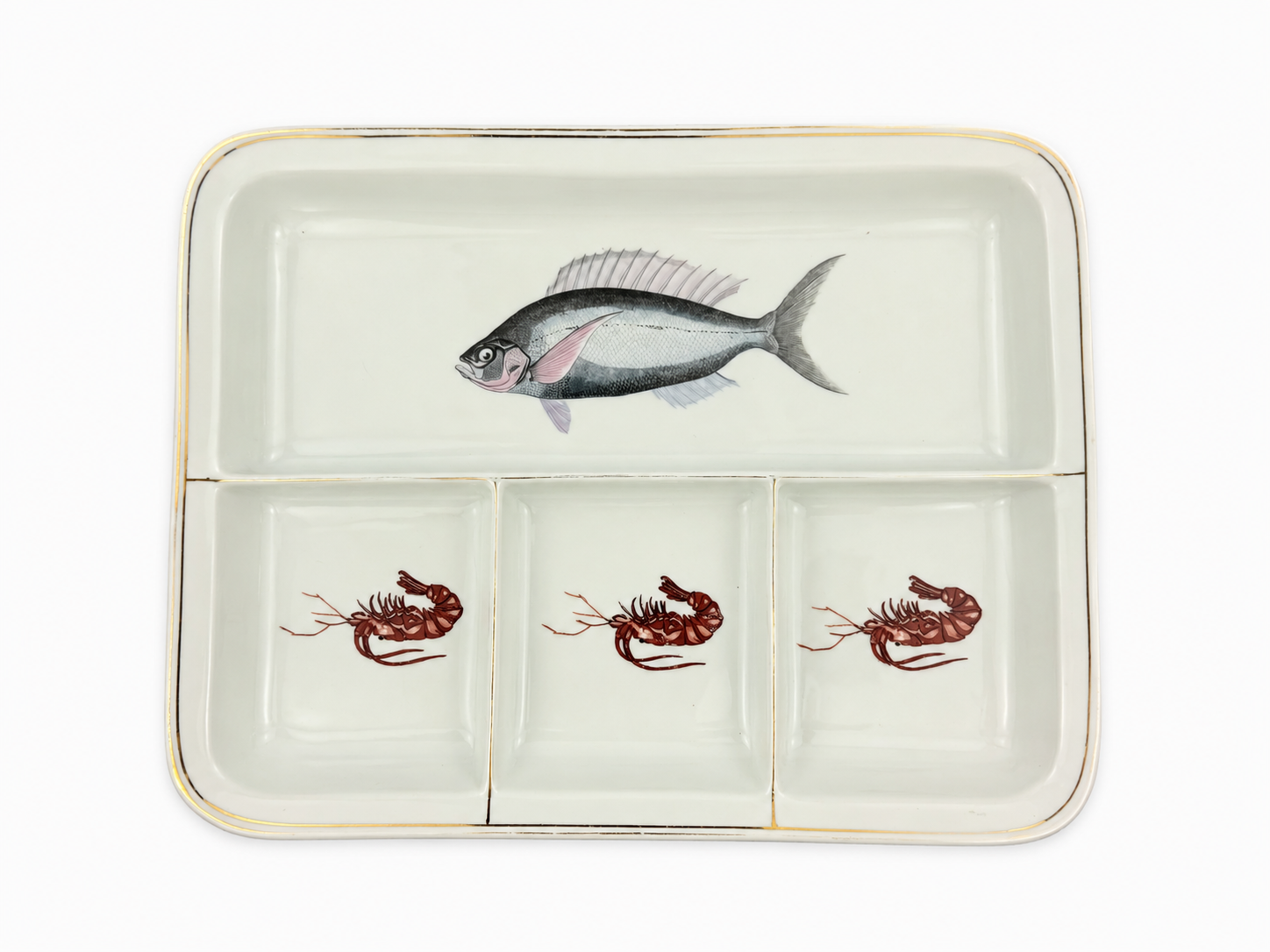
Steatita · Fish and Crustacean Serving Platter
BRAZIL • SECOND XX • DECORATED PORCELANA
Steatita Travessa with four compartments, fish and crustaceans illustrations and golden fillets.