The glass that went through the crisis
From the pressed glass distributed during the Great Depression to the color and shape experiences of the following decades.
Pesquisa e curadoria: Jorge Feitosa e Fábio Garcia
Verde, rosa, âmbar e azul chegaram às mesas americanas em pratos e travessas de vidro prensado. O nome Depression Glass reúne padrões produzidos sobretudo entre as décadas de 1920 e 1940, associados à vida doméstica durante a Grande Depressão. O Acervo Jorge Feitosa também apresenta vidros de décadas posteriores, como Viking e Indiana Glass: formas e acabamentos que ajudam a perceber como a indústria americana mudou depois da guerra.
Before 1929
Depression Glass brings together numerous industrially produced pressed glass patterns in the United States, especially between the 1920s and 1940s. The National Depression Glass Association records the Indiana Glass Company's Lawyer standard, since 1923, six years before the stock market broke that gave the name to the period.
The molding made it possible to reproduce ornaments directly in the glass and offer different formats and colors to a wide audience. Green, pink, amber and blue appear among the commercial hues of the period.
Table and commercial distribution
During the Great Depression, part of this glass circulated in popular shops and as a promotional incentive associated with commercial products and establishments. Tool distribution campaigns and the so-called dish nights in cinemas were part of this context, but were not the only way of selling.
It was possible to buy or receive pieces gradually and, over time, to gather a table service of the same standard. The colors and drawings began to participate in the daily life of the houses, amidst the changes of consumption caused by the crisis.
What manufacturing makes visible
Mold lines, bubbles and thickness variations may appear in pressed glass. The study of a specimen combines these traces with measurements, pattern design and factory catalogues. Each detail speaks of a stage of production.
Some patterns were reissued after 1940. Other glass of the same time, such as the most elaborate finishing models called Elegant Glass, belonged to different production and distribution lines. Format, design and technique help to distinguish these stories.
Postwar experimentation
From the mid-20th century, the American industry expanded the repertoire of vases and table centers with wavy openings and strong colors. Viking Glass developed the Epic Six Petal line, documented in 1962 catalogue; the Acervo records a copy of six orange glass petals.
Indiana Glass produced Sunset-finished glass in yellow and red shades. A source of research specialized in manufacturing describes the use of selenium and reheating for controlled color change. Chip & Dip Sunset Ombét do Acervo has already integrated its curatorial history.
Colour, fluorescence and industrial memory
Some fluorescent glass is in ultraviolet light due to components present in the composition. The reaction depends on the formula used, while the visible color, pattern and molding technique belong to other manufacturing choices.
No Acervo, peças associadas ao Depression Glass convivem com vidros de décadas posteriores, como as formas da Viking e os acabamentos da Indiana Glass. A comparação revela mudanças de cor, desenho e hábitos de receber, sem reunir produções diferentes sob uma mesma classificação.
Related readings
Documents and pages of the Acervo used as an editorial or in-depth basis. Do not replace catalogues of manufacturers and primary sources when required by historical identification.
- National Depression Glass Association — 92 Major Glass PatternsTable documents patterns since 1923 and later reproductions.
- National Depression Glass Association — Patterns Important to the History of Depression GlassJoyce E. Krupey's study on manufacturers and chronology.
- Viking Art Glass — 6 Petal Pattern Introduced in 1962Epic Six Petal's Seasonal Catalog Analysis.
- Indiana Glass — Ask Indiana GlassDescription of the Sunset finish and reaction of the selenium to reheating.
- Acervo Jorge Feitosa — Viking table centreRecord of the copy belonging to the Acervo.
- Frist Art Museum — American Art Deco, Depression GlassIt documents industrial glass, commercial toasts and distribution in cinemas during the Great Depression.
Objects related to this research
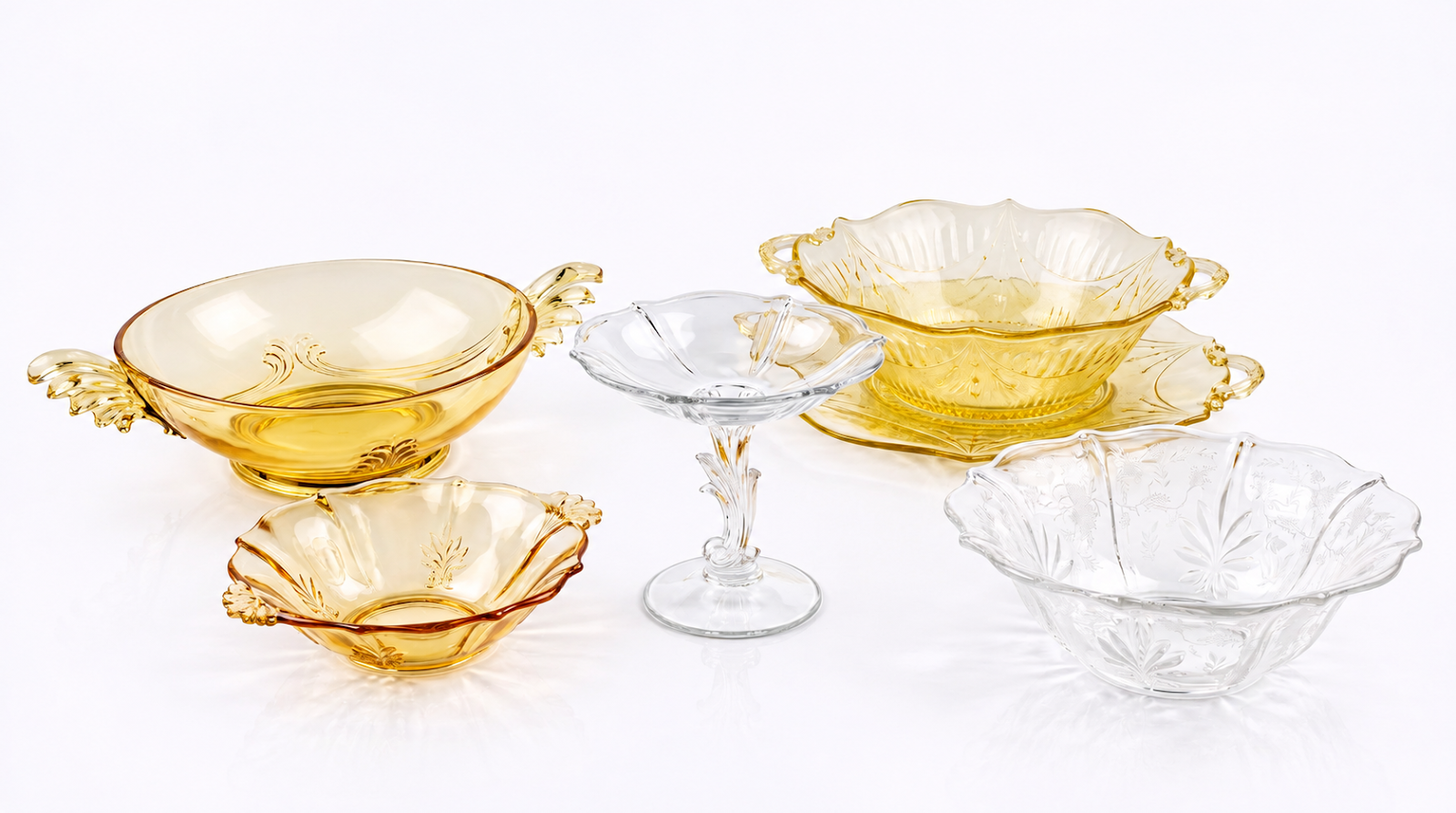
American Centerpieces · Clear and Amber Glass
USA • 1930s models • Colourless glass and topaz
Selection of Fostoria and Lancaster table centers in colourless and amber glass.
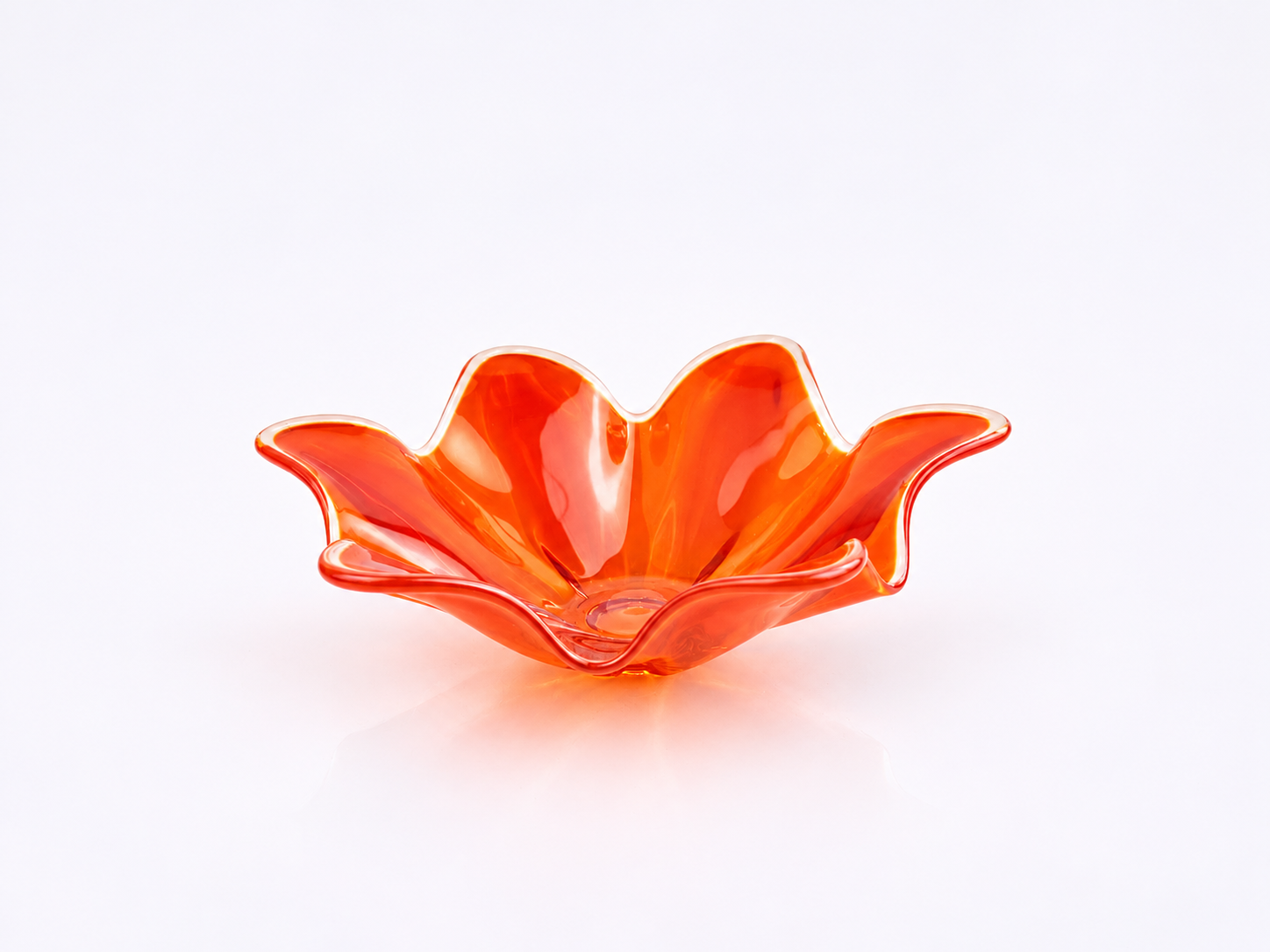
Viking Glass · Epic Six-Petal Centerpiece
West Virginia, USA • Years 60
Orange glass table centre with open edge and wavy six-point.
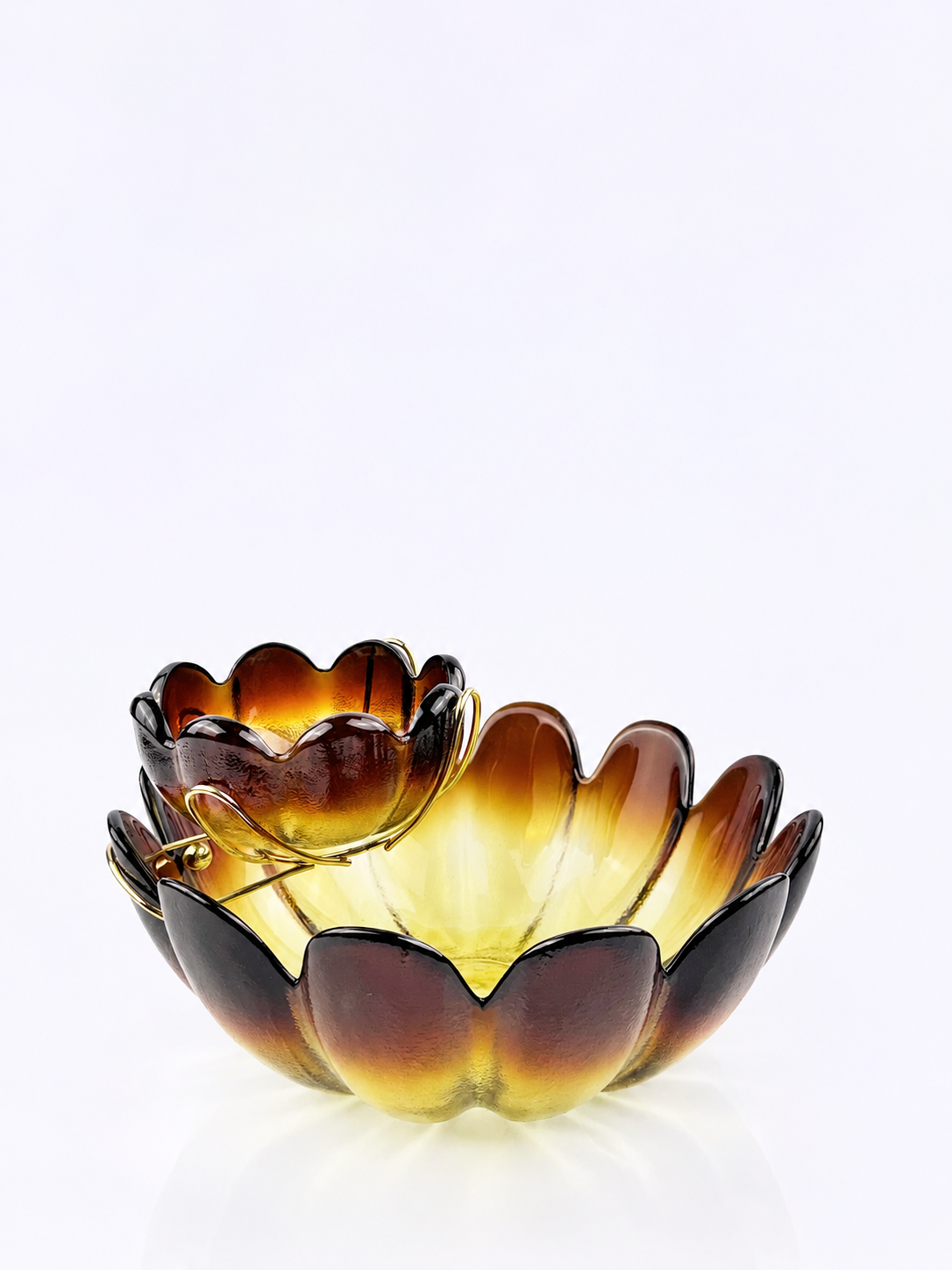
Indiana Glass • Chip & Dip Sunset Ombré
United States • c. 1960
Amber pressured glass gradient in the form of petals with original metallic support.