
1706 or 1982? Two Dates in the History of a Christofle Candlestick
The Duperier do Acervo Jorge Feitosa takes up a French design from the early 18th century, preserved at the Metropolitan Museum of Art.
Pesquisa e curadoria: Jorge Feitosa e Fábio Garcia
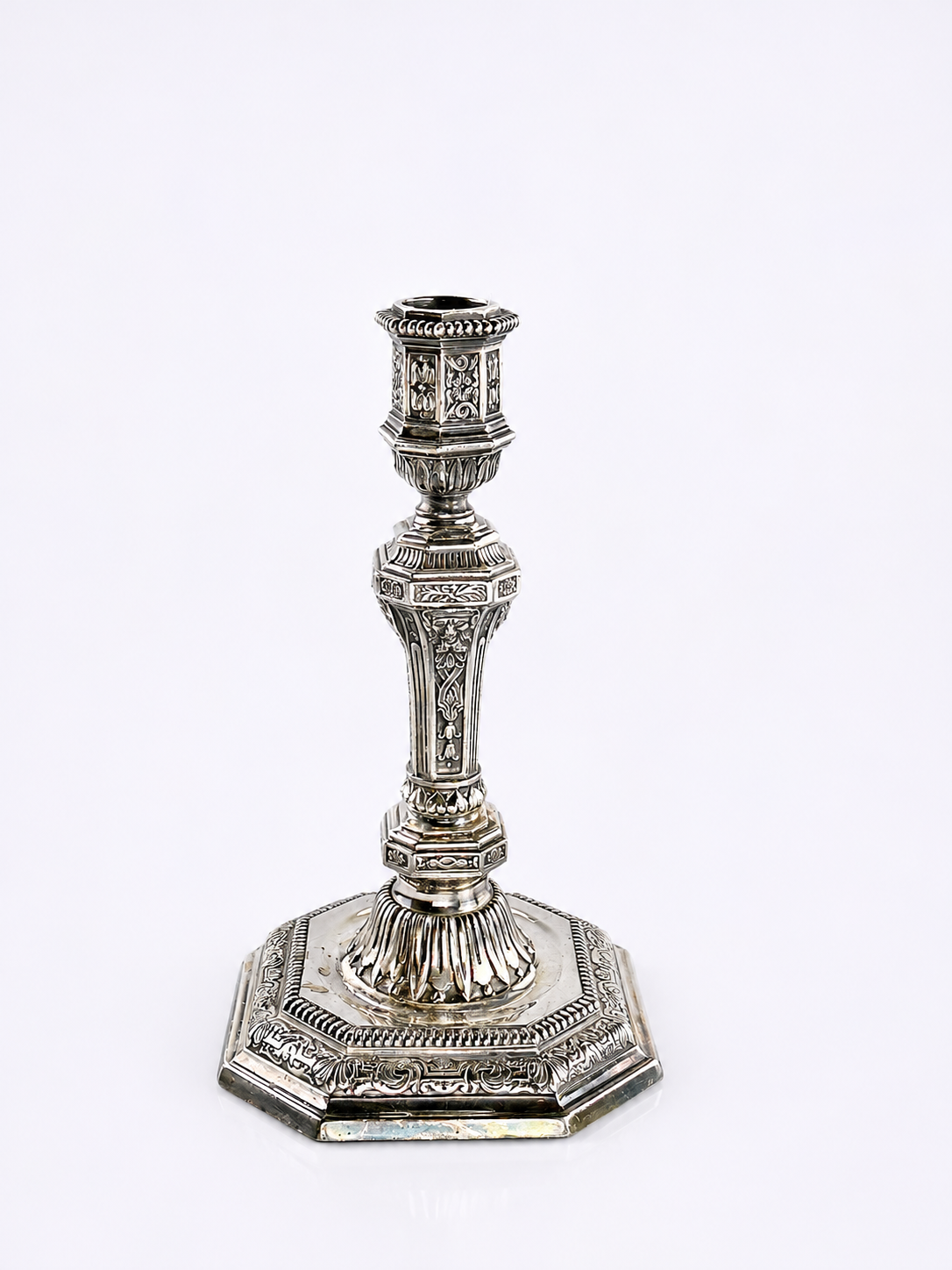
O castiçal Christofle Dupérier do Acervo Jorge Feitosa tem um lume, base facetada e relevos de inspiração Luís XIV. A edição é de 1982, mas seu desenho retoma um par de castiçais de prata realizado por Louis Dupérier em Paris, entre 1706 e 1707, hoje no Metropolitan Museum of Art. Conhecer as duas datas muda a maneira de ver a peça: o modelo pertence à ourivesaria histórica francesa; o exemplar do Acervo, à produção da Christofle no século XX.
The Castile in New York
In the collection of European decorative arts of the Metropolitan Museum of Art there is a pair of silver candlesticks created in Paris by Louis Dupérier between 1706 and 1707. Each piece measures approximately 21 centimeters high. The specimens arrived at the museum in 1948, by the legacy of the collector Catherine D. Wentworth.
The design belongs to the tradition of the French silversmith of the reign of Louis XIV: base of chamfered corners, balustrade rod and ornamentation distributed in well-defined areas. These characteristics associated the function of supporting the candle to the decorative work of metal.
To understand why a casteist received such attention, it is necessary to remember the role of light in the European houses of the period.
When lighting the table also expressed social position
Before gas lighting and electricity, candles were fundamental in domestic environments. Metropolitan notes that the amount of candles lit in a residence could indicate the economic condition of its residents. Bee wax, with cleaner burning and pleasant smell, cost significantly more than sebum.
In France from the late 17th century, the meetings began to occur with increasing frequency at night. Silver candlesticks gained importance in the preparation of the interiors and tables, because they gathered lighting and ornamental presentation.
On the surface of the metal, the flame found planes, reliefs and cuts. The design of the piece was part of the light distribution by the environment.
Louis Dupérier and the reliefs of a French model
Louis Dupérier received the title of gold master in 1706. The preserved candlesticks in the Metropolitan belong to the beginning of his activity as master and show a language linked to the period of Louis XIV.
In the description of the Duperier collection, Christofle highlights Godrons, Palms and Rosaceae, classical inspiration motifs organized in a symmetrical way. The alternations between ornamental bands and smoother areas structure the stem and the base.
This repertoire helps to understand the difference between recognizing a historical style and observing a specific model. In Duperier, the proportions and sequence of reliefs are part of the design that Christofle chose to recover.
Why Christofle resumed this design in 1982
Christofle was founded in Paris in 1830 by Charles Christofle. In 1842, the entrepreneur acquired patents for silver and gold by electrolysis, techniques that expanded the possibilities of producing objects for the table and ornamental pieces.
The company developed, throughout the 19th century, reproductions of historical objects through electroplasty. The relationship with preserved models in collections and museums became part of its industrial history.
In 1982, Christofle launched the Duperier collection, resuming the early 18th century candlestick. The brand itself identifies the edition as a reproduction of a pair preserved at the Metropolitan Museum of Art.
There is a material difference between the two stages of this story. Louis Dupérier's pair is silver; the Christofle edition is presented by the manufacturer as silver metal. The model remained recognizable, while the production conditions belonged to the other era.
The Duperier of the Acervo Jorge Feitosa
The Acervo is a candlestick Christofle Duperier of a light, from the 1982 edition. The faceted base, the balustrade rod and the ornamental reliefs focus attention on the course of light on the metal.
The piece integrates the selection available for purchase in Mata Lab, Cidade Matarazzo, São Paulo. Its presence there approaches a drawing associated with the 18th century French goldsmith's shop of a contemporary table.
Christofle also keeps Duperier in its Vintage catalogue, dedicated to second-hand pieces selected by the brand itself. The interest in this model remains, therefore, linked to both the history of silverware and the possibility of using it today.
Two dates, a drawing story
1706–1707 dates a pair of silver objects made by Louis Dupérier. In 1982, Christofle issued a version based on that model. The Acervo candlestick belongs to this later edition.
O interesse dessa edição está em reconhecer, no metal prateado do século XX, as proporções e o repertório ornamental de um modelo francês muito anterior. A leitura da peça depende justamente dessa distinção: o desenho histórico é documentado; a fabricação do castiçal do Acervo pertence à edição Christofle de 1982.
To light a candle in the Duperier is to rediscover its original function. To observe the base and the reliefs is to recognize the history that led Christofle to recover that drawing.
Related readings
Documents and pages of the Acervo used as an editorial or in-depth basis. Do not replace catalogues of manufacturers and primary sources when required by historical identification.
- The Metropolitan Museum of Art — Louis Dupérier, Pair of Candlesticks, 1706–1707Identification of the original silver pair, authorship, dating, dimensions, context of domestic lighting and entrance to the museum collection in 1948.
- Christofle — Vintage Duperier CollectionOfficial information on the 1982 edition, relationship with Louis Dupérier and ornamental repertoire of goths, palms and roses.
- Christofle — Duperier, Vintage candlestick of a WorldOfficial description of reproduction of the model preserved in the Metropolitan and identification of silver material.
- Christofle — Charles ChristofleFounded in 1830 and acquired the patents of silver and gold by electrolysis in 1842.
- Christofle — Metal at the FingersHistory of manufacturing techniques and electroplasty in Christofle production.
Objects related to this research
Christofle · Dupérier Candlestick
France • 1982 reissue
candlestick Christofle from the Duperier collection, produced in 1982 and inspired by the creation of Louis Dupérier goldsmiths. The ornamentation uses elements of the Louis XIV repertoire.
Christofle · Silver-Plated Chamber Candlestick
FRANCE • SECITULES XIX–XX • METAL PRACTICED
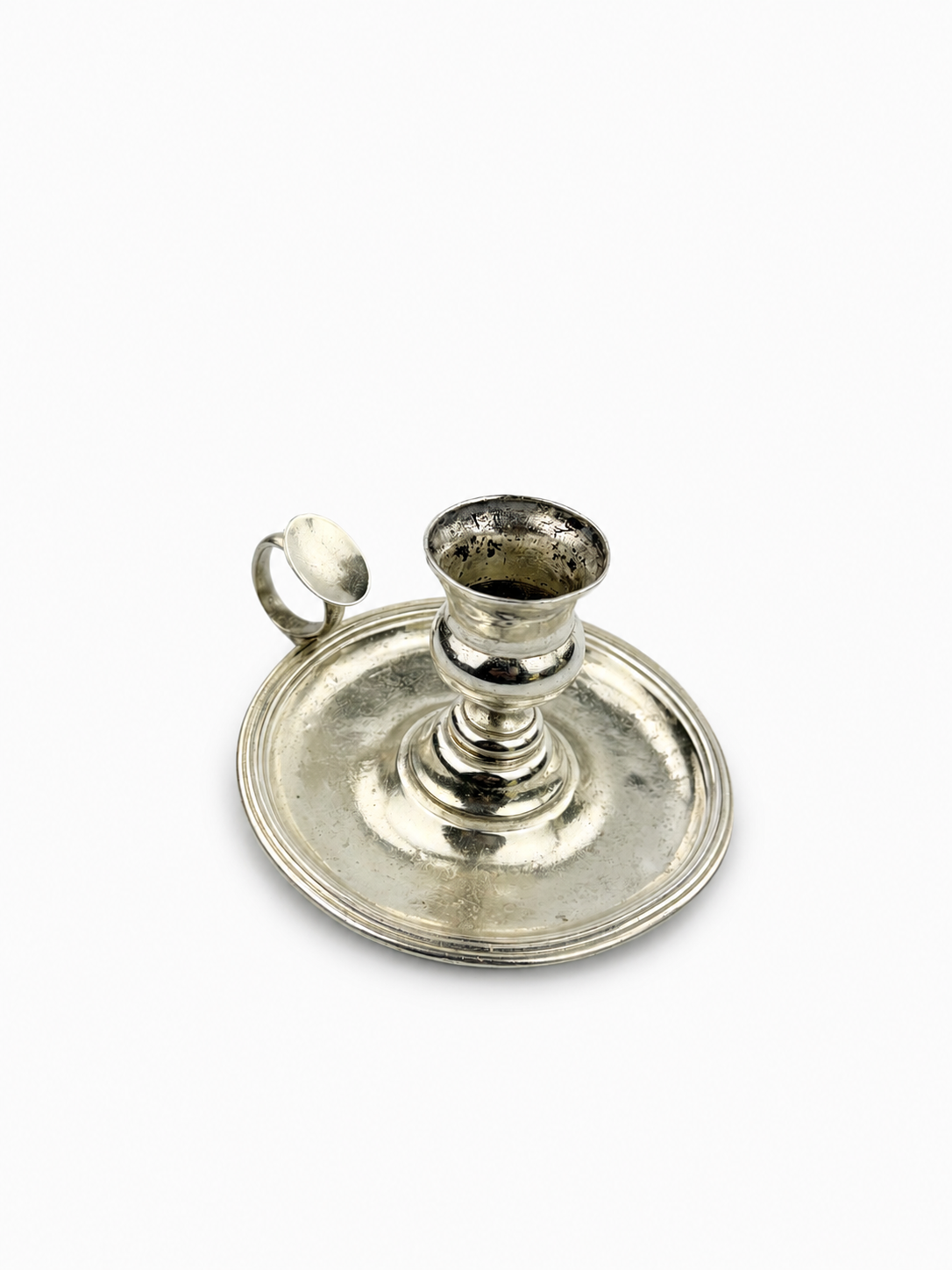
Christofle palmatorium with circular dish, raised mouthpiece and side handle. The format belongs to the family of portable candlesticks, known in French as hand-held movioirs.