The Golden Beast: Animals in the Decorative Arts
Gazels, birds and swans in gold metal help to understand the transformation of animal figures into domestic objects.
Pesquisa e curadoria: Jorge Feitosa e Fábio Garcia
Os chifres de antílopes desenham a silhueta de aparadores de livros; o pescoço de um cisne participa da forma de um castiçal. Nas peças reunidas pelo Acervo Jorge Feitosa, os animais organizam a função dos objetos e ganham destaque pelo acabamento dourado. Essas formas se aproximam do repertório ornamental associado ao Hollywood Regency, sem que a semelhança estabeleça autoria ou procedência comum.
The animal as a useful form
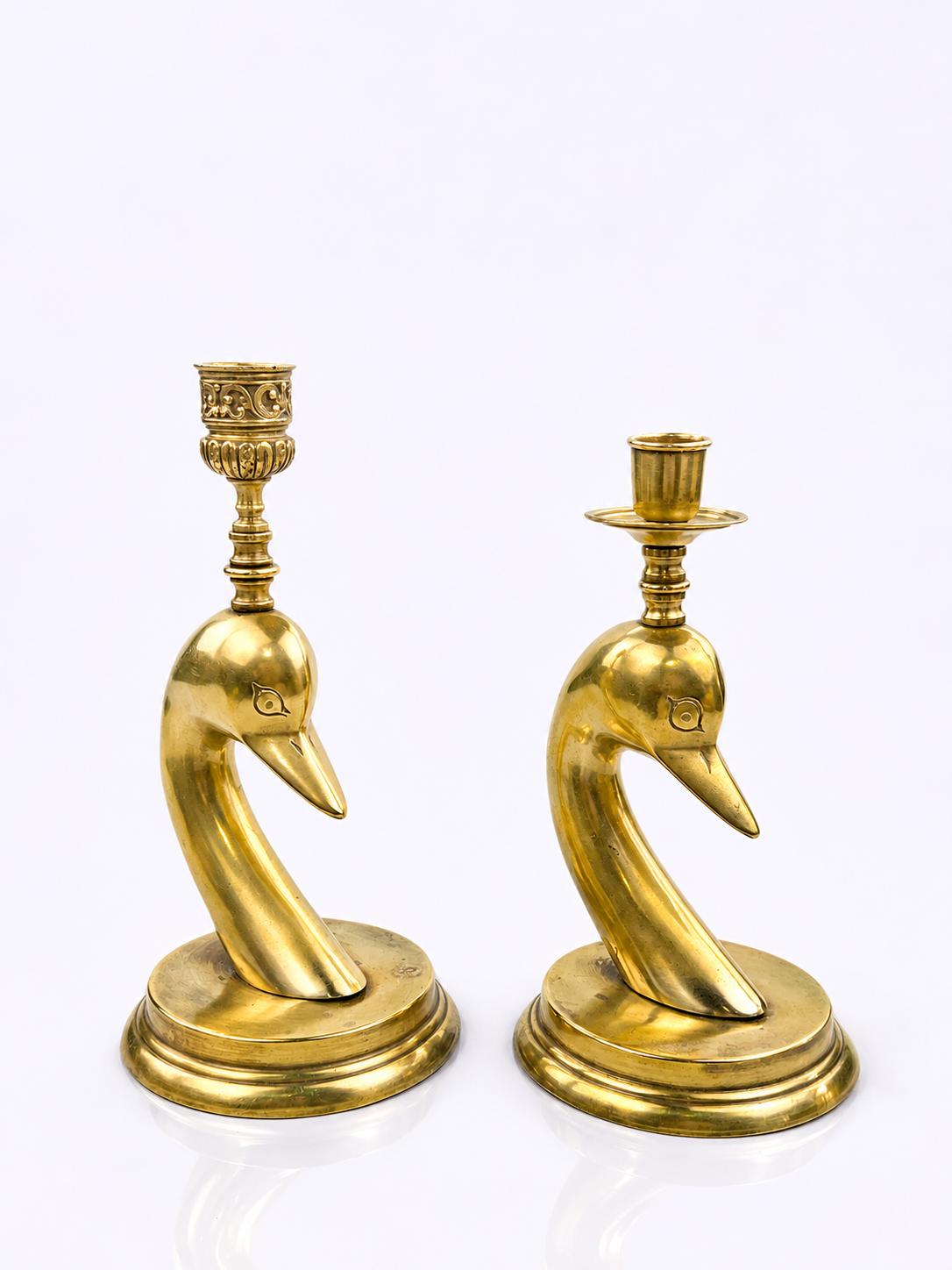
An antelope figure supports books. The body of a bird integrates a container. The curved neck of a swan participates in the design of a candlestick. In each case, the animal representation is incorporated into the functional form of the object.
The animals appear in the decorative arts long before the Hollywood Regency. In this repertoire, the silhouette participates in the function of the object and gains prominence through the golden surfaces, curves and a theatrical ornamentation.
The context of Hollywood Regency
The so-called Hollywood Regency was consolidated as a name for languages of interiors associated with American cinema and the decoration of its stars, especially throughout the 20th century. In its environments, classic references, contrasts of materials, reflective surfaces and figurative elements could participate in cenographic compositions.
William Haines, an actor who became a decorator, created interiors for film industry figures and participated in the Sunnylands project in California in the 1960s. Dorothy Draper, studied by the Museum of the City of New York, explored compositions of a strong ornamental presence. Her trajectories help to understand the cultural environment in which this taste spread.
Three Ways to Transform Nature
The Acervo trimmers have gold metal antelope heads from the mid-20th century. The elongated horns draw the silhouette that accompanies the function of supporting books.
In the flower shop, a bird integrates the structure of the container. The curves of the body and the wings participate in the composition and approximate the animal figure of the domestic function.
In the chastise trees, the stems accompany the swan neck. The animal curve guides the design that leads to the sail support. The catalogue records this pair as the Acervo's history, as well as the trimmers and the flower shop.
Directory, not assignment
Brass, animal figures and golden surfaces approach these objects from the language associated with Hollywood Regency and its mid-20th century rereadings. Relatives are in ornamental choices and the effect of shapes on the environment.
A presença de animais, do metal dourado e de curvas expressivas aproxima os exemplares de um repertório ornamental, mas não comprova fabricante nem data. No Acervo, os aparadores de antílopes, a floreira com ave e os castiçais de cisne podem ser vistos em suas diferenças de forma, função e acabamento.
Related readings
Documents and pages of the Acervo used as an editorial or in-depth basis. Do not replace catalogues of manufacturers and primary sources when required by historical identification.
- Sunnylands — ArchitectureIt documents William Haines's performance and Sunnylands interior project in the 1960s.
- Museum of the City of New York — The High Style of Dorothy DraperExhibition that documents Draper's work and the conception of decoration as experience.
Objects related to this research
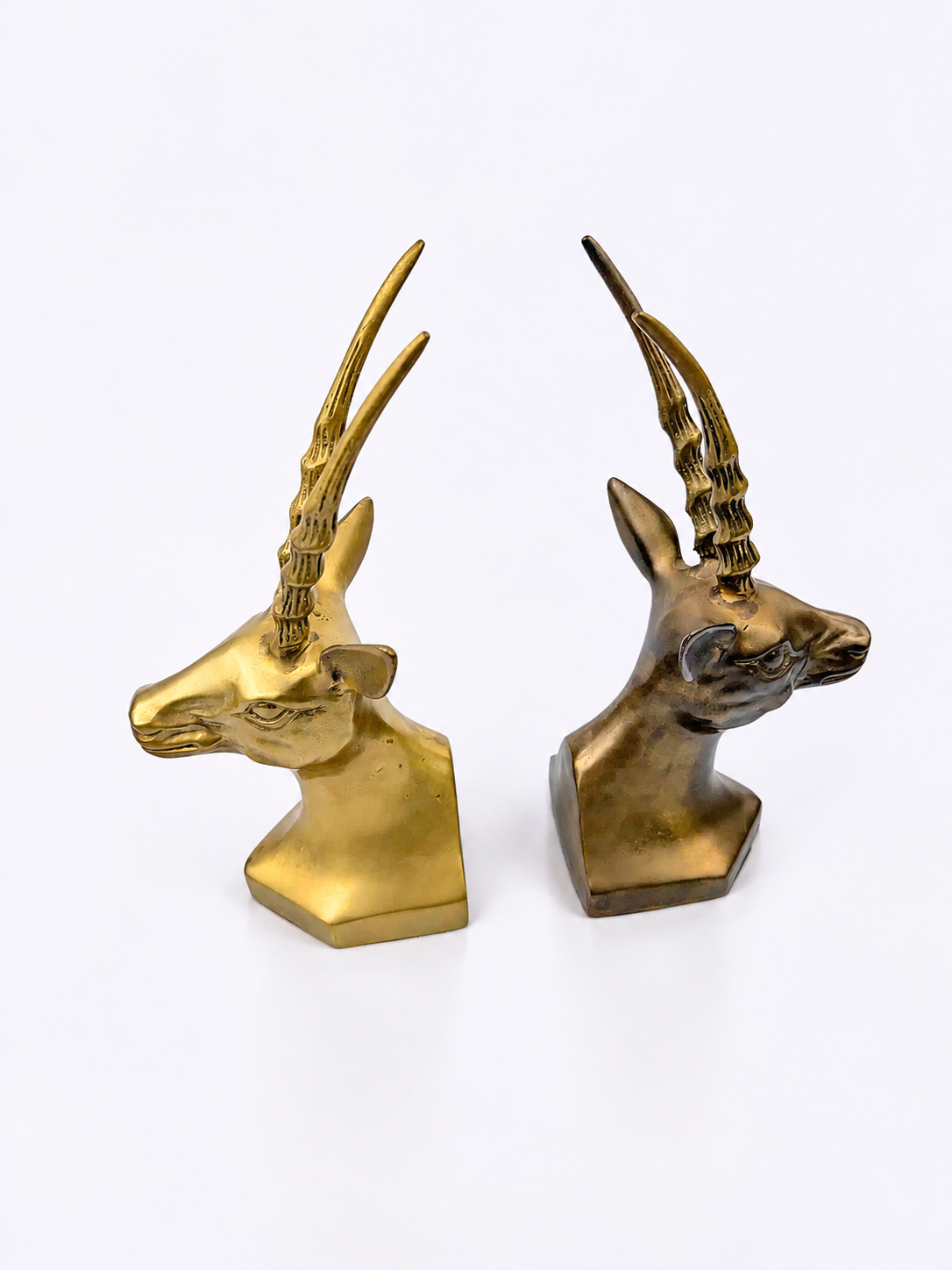
Pair of Antelope-Head Bookends in Gold-Tone Metal
Brass Massif • c. 1960
Pair of trimmers with head of animals of elongated horns, in gold-finishing metal.
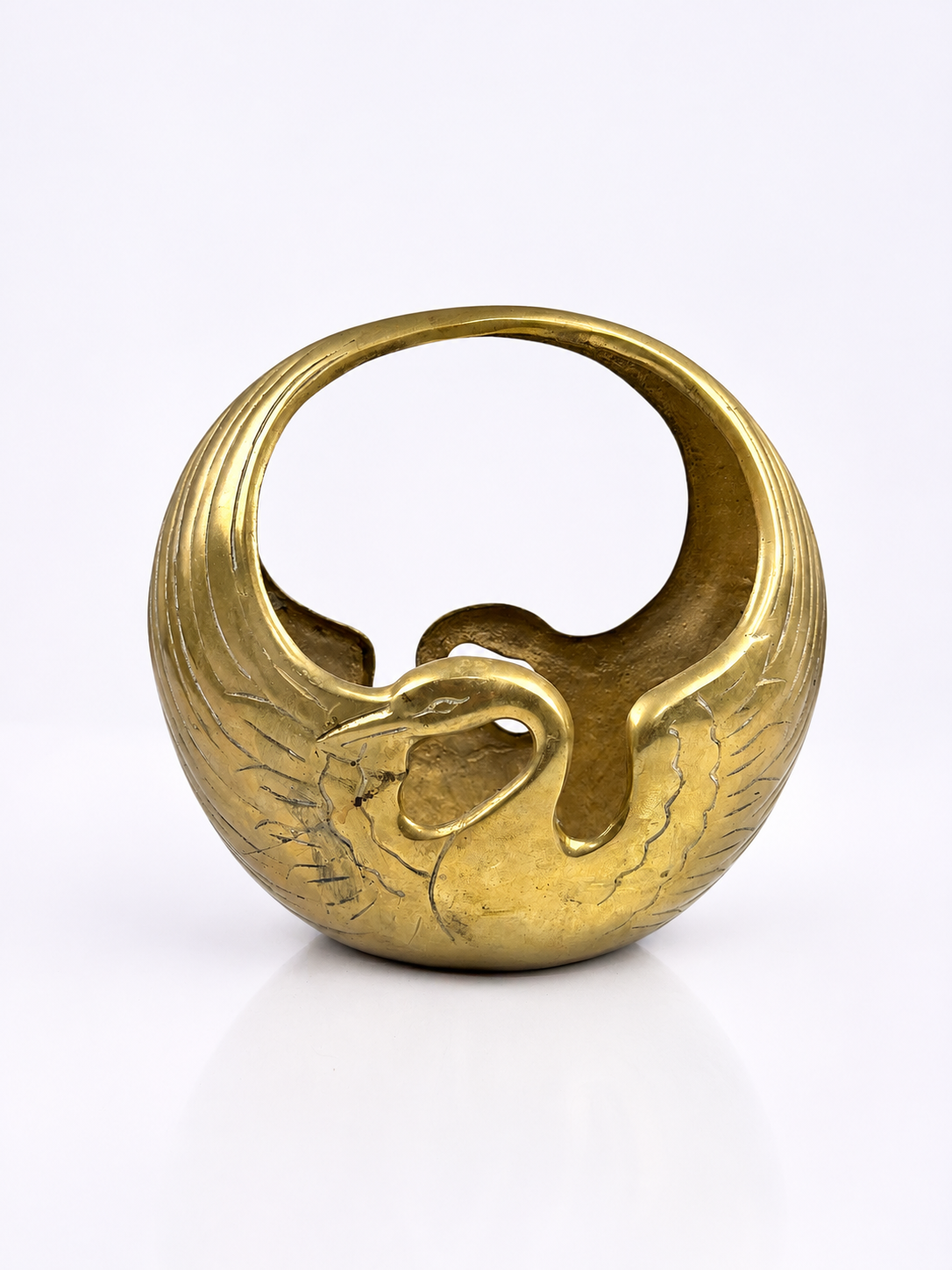
Sculptural Planter · Brass Bird
Second half of the 20th century
Functional and sculptural vessel with bird body integrated to the handle.
Pair of Swan-Form Candlesticks in Gold-Tone Metal
Brass • c. 1950-1970
Pair of chastiseurs with swan necks forming the stems, on circular bases.